

Reference — fire investigation
NFPA 921 Isn't Mandatory. Invoking It Is Binding.
The compliance recital on page one of an origin-and-cause report is what converts NFPA 921 into a standard the report can be measured against.
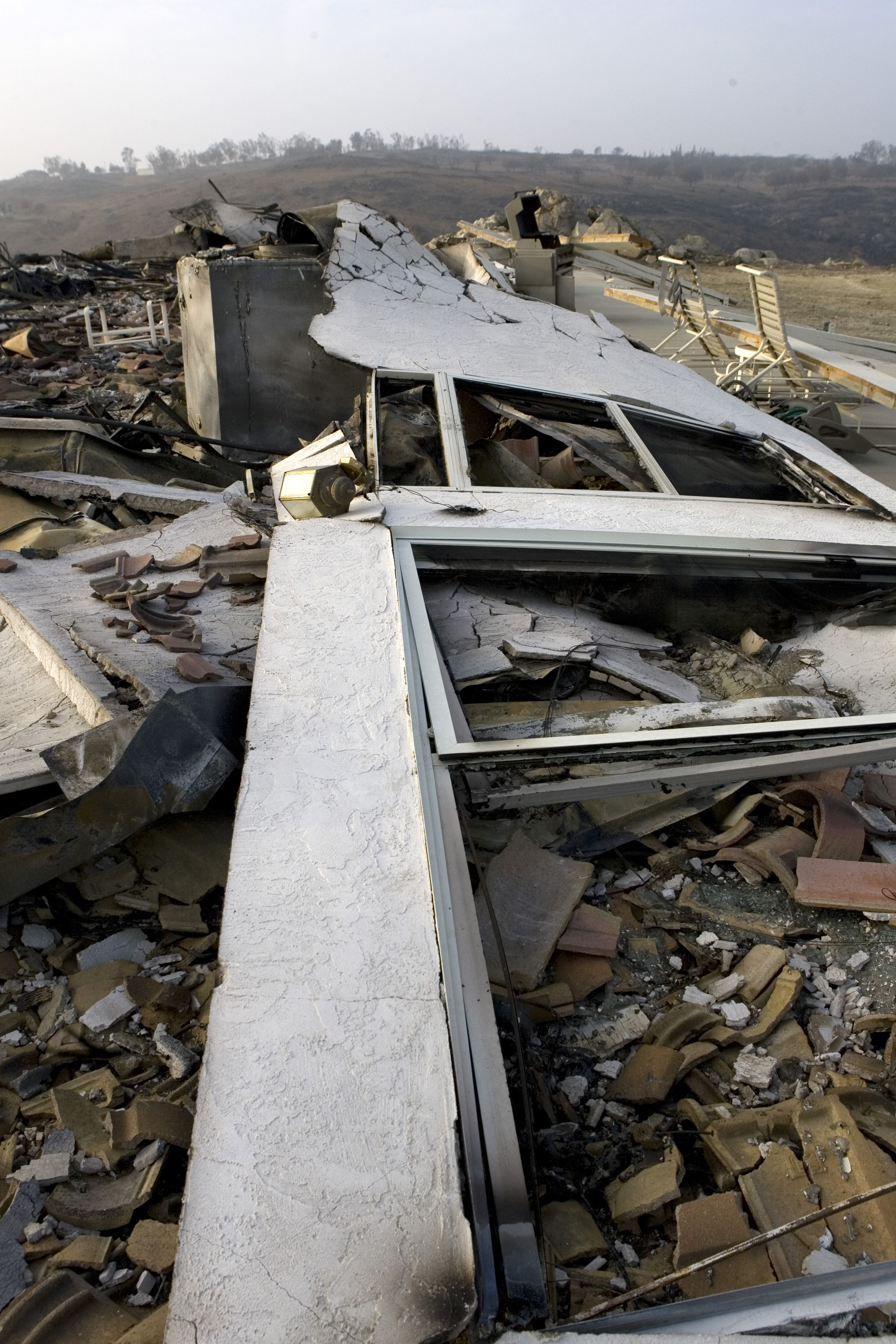
Photo: BLM Idaho Fire
In short
Courts do not require fire investigators to follow NFPA 921, but an investigator who states in the origin-and-cause report that they followed it is held to it. That recital is what makes the guide's rejection of negative corpus at § 19.6.5 enforceable against a carrier's causation opinion.
On March 21, 2024, a New Jersey judge let a Mercer County detective testify about where a Trenton row-house fire started, then barred him from telling a jury what caused it. The detective had already testified that "if the methodology used does not comport with 921, then the opinion of the investigator is of no use in a courtroom."1 The court took him at his word and measured his causation opinion against the standard he had named for himself. It did not survive.
State v. Ordonez-Lima, Ind. No. 22-03-0196-I (N.J. Super. Ct. Law Div. Mar. 21, 2024), is a criminal arson prosecution, so the posture is nothing like a first-party property file. The methodology rule underneath it is the one federal courts have been applying to insurers' retained experts since the late 1990s: an expert who purports to follow NFPA 921 must apply its contents reliably.2
NFPA 921 carries no force of law, and courts say so regularly. The Eighth Circuit has stated it has never held the guide to be the only reliable way to investigate a fire.2 The guide describes its own standing in similar terms: deviations from its procedures "are not necessarily wrong or inferior but need to be justified," at § 1.3.1
An investigator is free to work outside it, provided the report says so and defends the choice. Very few do. The origin-and-cause report that lands in your file will almost always recite NFPA 921 compliance somewhere in its opening pages, because the recital is what makes the report read as professional work to a claims reviewer, and because the investigator's own expert report conventions call for it. The recital also converts every provision of the guide into a yardstick the report can be measured against, which is the part nobody writing the report is thinking about.
§ 19.6.5
Negative corpus is the practice of identifying an ignition source by eliminating the sources actually found in the area of origin, then attributing the fire to something for which no supporting evidence exists.1 NFPA 921 rejects it at § 19.6.5, on the ground that the approach produces hypotheses nobody can test.
In Ordonez-Lima, the detective concluded the fire was "incendiary" — defined at § 3.3.121 as one "intentionally ignited in an area or under circumstances where and when there should not be a fire" — while relying on speculation in place of supporting evidence, and while adopting a second investigator's unexplained exclusion of an electrical cause.1 Neither defect touched his credentials, which nobody contested. Both went to method. The court left his opinions on area of origin and point of origin untouched and struck only causation, which is the same line a well-built response to an adverse fire report tends to draw: the carrier's investigator usually knows where the fire started, and the fight is over how they got from there to a cause.
Where the evidence will not eliminate one plausible scenario in favor of another, the guide's answer is undetermined — a finding in its own right, and not a failed investigation.
Insurers' own experts got there first
Several of these exclusions predate the arson case, and they were entered against carriers.
| Case | Court | What was excluded |
|---|---|---|
| Michigan Millers Mut. Ins. Corp. v. Benfield (1998) | 11th Cir. | Exclusion of a negative-corpus-type causation opinion affirmed under Daubert |
| Somnis v. Country Mut. Ins. Co. (2012) | D. Minn. | Incendiary opinion excluded once the expert conceded he could not identify an accidental cause |
| State Farm Fire & Cas. Co. v. Steffen (2013) | E.D. Pa. | Opinion rejected for resting on untestable negative corpus while claiming NFPA 921 |
| Russell v. Whirlpool Corp. (2012) | 8th Cir. | NFPA 921 not the only reliable method, but an expert invoking it must apply it reliably |
Steffen is the sharpest of them. The court rejected an opinion that "impermissibly relies on . . . untestable 'negative corpus' even though the NFPA 921 protocol that he purports to have followed specifically identifies his approach as inconsistent with the scientific method."4 Benfield got there fifteen years earlier under a straight Daubert analysis.3 Somnis took a different route to the same place, excluding an incendiary opinion because once the expert testified he could not identify an accidental cause, the jury needed no help concluding the fire was intentional.5
Most disputed fire claims never reach a hearing on any of this, and an admissibility ruling is not a coverage determination. The report still drives the denial, and reading § 19.6.5 against it before you respond costs about an hour. Credentials are rarely the soft spot: an IAAI-CFI holder has logged 400 training hours and five years of qualifying experience before sitting a proctored exam, and recertifies every five years on 100 hours more.7 Method is where these reports come apart, and the report tells you which method it agreed to when it named NFPA 921 on page one. Nothing else about the file changes: the site walk through sworn proof of loss proceeds the way it always did.
Is a fire investigator legally required to follow NFPA 921?
No. Courts have repeatedly declined to hold NFPA 921 the only reliable method for investigating a fire, and the guide itself says deviations need justification rather than being wrong. The obligation attaches when the investigator states they followed it.
What is negative corpus?
It is the practice of eliminating the ignition sources actually found in the area of origin and then attributing the fire to something no evidence supports. NFPA 921 rejects it at § 19.6.5 because it generates hypotheses that cannot be tested.
Does an undetermined cause mean the investigation failed?
No. Where the evidence does not eliminate one plausible scenario in favor of another, undetermined is the conclusion NFPA 921 directs. A report that reaches a definite cause without evidence for it is the weaker document.
Can a report be challenged on origin as well as cause?
It depends. In Ordonez-Lima the court left the detective's area-of-origin and point-of-origin opinions intact and struck only causation. An origin finding usually rests on fire patterns and physical evidence that survive a method challenge better than a cause opinion built by elimination.
What credentials does a certified fire investigator hold?
An IAAI-CFI applicant needs five years of fire investigation experience under NFPA 1033, 400 training hours, and a passing score on a closed-book proctored exam. Recertification runs every five years and requires 100 additional training hours and ten CFITrainer.net modules.
Sources cited
- State v. Ordonez-Lima, Ind. No. 22-03-0196-I (N.J. Super. Ct. Law Div., Mercer Cnty. Mar. 21, 2024)— New Jersey Courts
- Russell v. Whirlpool Corp., 702 F.3d 450 (8th Cir. 2012)— CourtListener / Free Law Project
- Michigan Millers Mut. Ins. Corp. v. Benfield, 140 F.3d 915 (11th Cir. 1998)— CourtListener / Free Law Project
- State Farm Fire & Cas. Co. v. Steffen, 948 F. Supp. 2d 434 (E.D. Pa. 2013)— CourtListener / Free Law Project
- Somnis v. Country Mut. Ins. Co., 840 F. Supp. 2d 1166 (D. Minn. 2012)— CourtListener / Free Law Project
- NFPA 921, Guide for Fire and Explosion Investigations— National Fire Protection Association
- IAAI-CFI credential requirements and recertification— International Association of Arson Investigators
Stop rebuilding the same documents.
Letters, notices, and sworn documents in claimOS start from the claim facts already on file: names, dates, policy numbers, and the statutory citations that match the state.