
Massachusetts · Chapter 187
Chapter 187 Bans Six Verbs. Only One Gets You Into 93A.
Section 2C excises six kinds of anti-PA endorsement; subclause (o) opens the 93A damages door for exactly one of them.
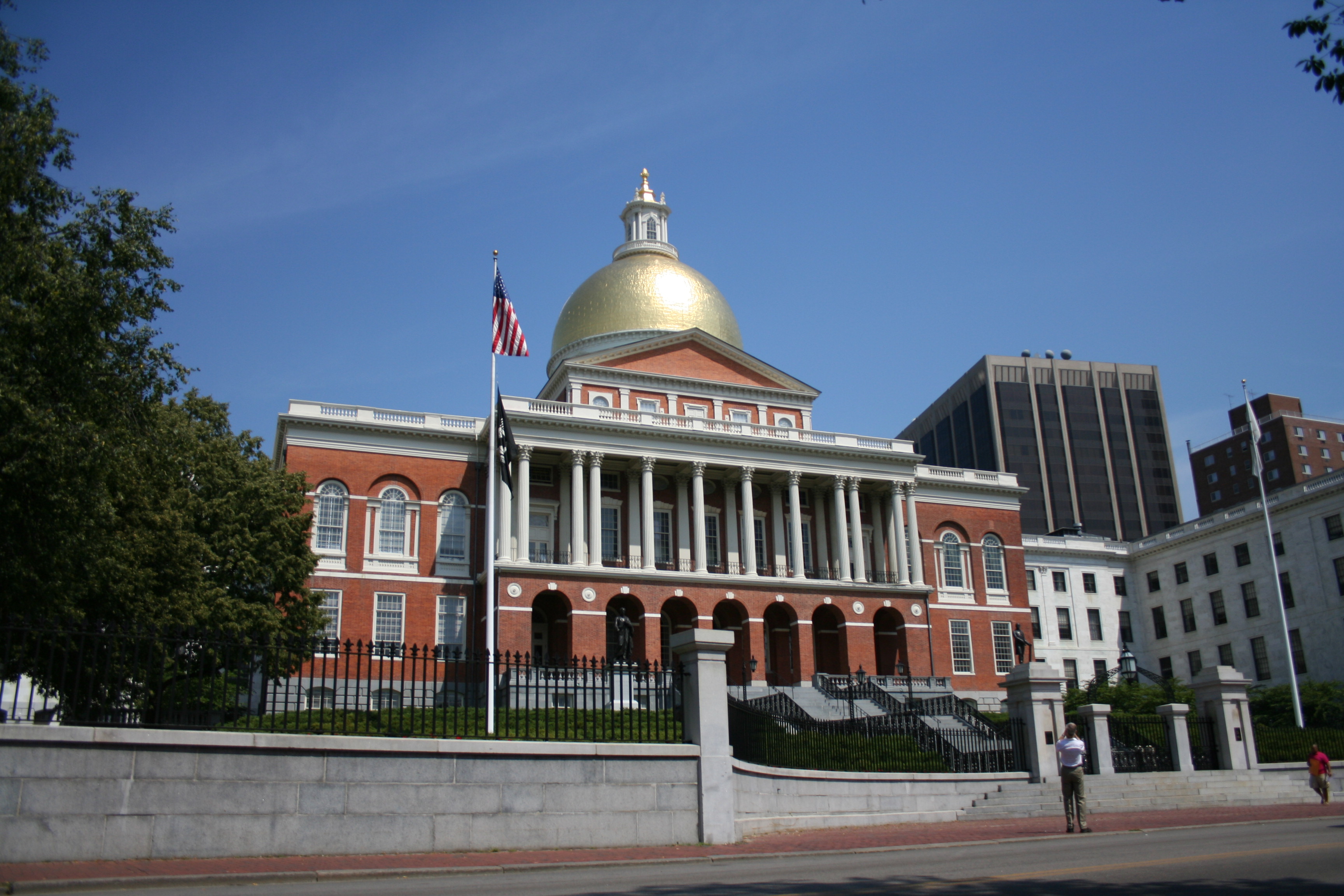
Photo: Wikimedia Commons
In short
Massachusetts Chapter 187 bars anti-public-adjuster endorsements using six verbs in G.L. c.175 § 2C but makes only "hiring" an unfair claim settlement practice under new c.176D § 3(9)(o). Because c.93A § 9(1) grants the private right of action solely for violations of clause (9), an endorsement barring only consultation is excised from the policy yet carries no 93A damages or fee exposure. Both provisions take effect November 5, 2026.
An endorsement in force on a commercial property policy read: "the NAMED INSURED shall not hire, engage, retain, contract with, or otherwise utilize the services of a public adjuster…" That language sat inside a policy litigated as Barbato v. Interstate Fire & Cas. Co., No. 1:25-cv-05312 (S.D.N.Y.), before Judge John G. Koeltl, where the amended complaint was dismissed with prejudice on May 15, 2026 and a notice of appeal followed on May 24. 7 On November 5, 2026, a clause written like that one becomes unenforceable in Massachusetts and gets excised from the policy by operation of statute. 2 Whether it also becomes something an insured can sue over is a separate question, and the answer turns on one verb.
Six verbs in section 2C, one verb in subclause (o)
Massachusetts Acts of 2026, c. 187, carries the title "AN ACT FURTHER REGULATING INSURANCE CLAIMS" and came out of Senate No. 785. 1 New G.L. c.175 § 2C reads: "It shall be unlawful for a company as defined in section 1 and any non-admitted or surplus lines insurer to include in a policy of property and casualty insurance any language, form or endorsement, which prohibits an insured from hiring, retaining, engaging, utilizing, consulting or contracting with a public insurance adjuster, as defined in section 162, as a condition to recovery under such policy. Any such language, form or endorsement shall be unenforceable and shall be excised from the policy of insurance; provided, however, that all remaining policy language, forms and endorsements in the policy shall remain unaffected." 12
Six verbs. Count them: hiring, retaining, engaging, utilizing, consulting, contracting.
The same Act added subclause (o) to G.L. c.176D § 3(9), the unfair claim settlement practices list. It reads in full: "A provision in any policy of property or casualty insurance that prohibits an insured from hiring a public adjuster for services provided pursuant to this chapter." 13 One verb. Clause (9) previously ran (a) through (n), fourteen subclauses, so (o) is genuinely the fifteenth entry on that list. 3
| G.L. c.175 § 2C | c.176D § 3(9)(o) | The Barbato endorsement | Tex. Ins. Code § 4102.007(b) | |
|---|---|---|---|---|
| hire | ✓ | ✓ | ✓ | ✕ |
| retain | ✓ | ✕ | ✓ | ✕ |
| engage | ✓ | ✕ | ✓ | ✕ |
| utilize | ✓ | ✕ | ✓ | ✕ |
| consult | ✓ | ✕ | ✕ | ✕ |
| contract | ✓ | ✕ | ✓ | ✓ |
Read the "consult" row across. The endorsement a federal court actually had in front of it barred five verbs and left consulting alone, which means a carrier drafting today already knows how to write a clause that stops short of hire-retain-engage-contract-utilize and still chills the insured out of ever picking up the phone. 7 Section 2C reaches that clause. Subclause (o) does not.
The dates took a minute to settle. The Act text closes "Approved, August 7, 2026," while the Acts-of-2026 index line says "Approved by the Governor, August 10, 2026." 1 The Trial Court Law Libraries now annotate both new provisions "effective November 5, 2026," which is August 7 plus ninety days, so the ninety-day clock runs from the earlier date. 23 If you are running the pre-effective-date policy audit on your book, November 5 is the line.
Why clause (9) is the only clause that pays
Chapter 93A § 9(1) grants the private right of action to, among others, "any person whose rights are affected by another person violating the provisions of clause (9) of section three of chapter one hundred and seventy-six D." 4 The cross-reference runs to clause (9) by number, not to chapter 176D at large.

That one citation is doing all of the work, because the remedies stack sits behind it. Section 9(3) requires a written demand delivered at least thirty days before filing and then authorizes "up to three but not less than two times" actual damages where the violation was willful or knowing, or where the respondent refused in bad faith to grant relief on the demand; § 9(4) adds reasonable attorneys' fees and costs. 4 The multiplier and the fee award are why a carrier's counsel reads 176D at all. Neither attaches to a statute that merely declares policy language unenforceable. Section 2C gives an insured excision, full stop, and a policy with a dead endorsement in it is a policy the insured was always entitled to. When the demand window opens, the residential and commercial tracks diverge, which is the § 9 versus § 11 split and a separate piece of homework.
The obvious critique gets this wrong. Clause (12) of 176D § 3 lists specific c.175 sections whose violation is itself an unfair method of competition, and § 2B is on that list; Chapter 187 did not add § 2C to it. 13 A reader might conclude the Legislature simply forgot a cross-reference and that adding § 2C to clause (12) would have fixed everything. It would not have. Section 9(1) hooks to clause (9), not clause (12), so a § 2C violation routed through clause (12) still lands outside the private-action grant. 4 The only door into 93A § 9 is subclause (o), and subclause (o) says "hiring." The single verb is load-bearing in the literal sense: remove it and the damages engine has no intake.
So the operative question on a Massachusetts file after November 5 runs past voidness. It asks whether the endorsement used the word "hiring," or a synonym a court will treat as equivalent, because that word decides whether the insured is holding a nullified clause or a claim with a fee-shifting multiplier behind it.
What does "this chapter" point at?
Subclause (o) ends with a qualifier: "for services provided pursuant to this chapter." 13 Subclause (o) lives in chapter 176D. Chapter 176D defines unfair methods of competition and unfair or deceptive acts in the insurance business. It does not define a public insurance adjuster, does not license one, does not authorize or in any sense "provide" public-adjuster services. That definition sits in G.L. c.175 § 162, which describes a public insurance adjuster as whoever "for compensation, not being an attorney at law acting in the usual course of his profession, directly or indirectly solicits from an insured or the representative of the insured, or performs services pursuant to an agreement, engagement or undertaking to represent the insured in connection with the assessment of damages, negotiation, settlement, appraisal or reference of a loss under a fire insurance policy, homeowners insurance policy, commercial multi-peril insurance policy, business interruption insurance policy, fidelity bond or crime insurance policy, inland or ocean marine insurance policy, or other property damage insurance coverage of any sort." 5 Section 2C points at § 162 explicitly, by name. Subclause (o) points at "this chapter," and in its host chapter there is nothing at the other end of that arrow.
Both readings are available to a carrier's brief.
The literal reading takes "this chapter" at face value: (o) reaches only an endorsement barring an insured from hiring a PA for services rendered pursuant to chapter 176D. Since 176D provides no PA services, that is a category with close to nothing in it, and the emptiness compounds the single-verb limit already built into the subclause. The surplusage reading runs the other way. Courts avoid constructions that render a statutory provision inoperative, so a judge reads "this chapter" as a drafting artifact, or reads it back to c.175 where § 162 lives, and (o) gets its plain operative force against any endorsement barring hiring.
Nothing in the Act resolves this. What the text does not settle, the Division of Insurance has not settled either: the DOI has issued no bulletin implementing Chapter 187, and as of today the bulletins list carries no 2026 bulletin at all, the most recent being Bulletin 2025-06 of December 19, 2025. 8 Regulators do sometimes tighten PA practice through instruments rather than statutes, as with the Illinois co-payee bulletin, and a Massachusetts bulletin reading (o) one way or the other would matter. None exists.
There is a plainer explanation for the mismatch than legislative intent, and it comes from Texas.
Texas wrote a date into its statute. Massachusetts left the page blank.
Tex. Ins. Code § 4102.007(b) reads: "An insurance policy, including any endorsement, to which this section applies may not include a provision that prohibits an insured from contracting with a public insurance adjuster for services provided under this chapter." 6 Other commentators have already worked the Texas comparison. The part that bears on the antecedent problem is narrower: § 4102.007 sits in Insurance Code chapter 4102, titled Public Insurance Adjusters, a chapter that defines, licenses and regulates PA work. "This chapter" there has an obvious referent and the qualifier reads naturally. Massachusetts kept the formulation and changed the host. The trailing phrase survived a transplant into a chapter it does not fit.

Texas also wrote down which policies it meant. H.B. 1706, 88th Legislature, Regular Session, took effect September 1, 2023, and SECTION 2 confines § 4102.007 to "an insurance policy delivered, issued for delivery, or renewed on or after January 1, 2024." 6 Chapter 187 contains no applicability clause of any kind. 1 Whether § 2C and (o) reach a policy already in force on November 5, 2026, or only policies issued or renewed after that date, finds no answer on the face of the Act, and this post does not answer it either. Only the drafting contrast can be stated responsibly: one legislature addressed the question in a numbered section, the other did not address it.
The Barbato appeal is the other open item. The docket shows removal June 26, 2025; a motion to dismiss granted without prejudice December 15, 2025; an amended complaint January 2, 2026; that amended complaint dismissed with prejudice May 15, 2026 with the case closed; a notice of appeal May 24, 2026, corrected June 3, 2026; and the record transmitted to the Second Circuit June 3, 2026. 7 The merits opinion remains closed to us, so nothing here characterizes why the district court ruled as it did. The appeal is live. A Second Circuit disposition construing a five-verb anti-PA endorsement would be the first appellate word on a clause type Massachusetts has just made unenforceable within its own borders, and it will land, if it lands, on a docket nobody in this trade is watching.
Questions from the Massachusetts file
Does Chapter 187 let a policyholder sue a carrier for having an anti-PA endorsement?
It depends on the verb. G.L. c.93A § 9(1) grants the private action only to a person whose rights are affected by a violation of clause (9) of G.L. c.176D § 3, and the only anti-PA language inside clause (9) is new subclause (o), which reaches a provision prohibiting an insured from "hiring" a public adjuster. An endorsement barring only consulting with a PA is unenforceable and excised under § 2C but sits outside (o) on the face of the text.
Would adding § 2C to clause (12) of 176D § 3 have solved the problem?
No. Clause (12) makes violations of listed c.175 sections an unfair method of competition, but § 9(1) of chapter 93A cross-references clause (9) specifically, not clause (12) and not chapter 176D at large. A § 2C violation routed through clause (12) still would not reach the § 9 damages and fee provisions.
Is the effective date August 7, August 10, or November 5, 2026?
November 5, 2026. The Act text says "Approved, August 7, 2026" while the session-laws index line says "Approved by the Governor, August 10, 2026," but the Trial Court Law Libraries annotate both new provisions effective November 5, 2026, which is ninety days from August 7.
Does § 2C apply to surplus lines policies?
Yes. The text reaches "a company as defined in section 1 and any non-admitted or surplus lines insurer," so the excision rule is not confined to admitted carriers.
Does Chapter 187 apply to a policy already in force on November 5, 2026?
Unresolved. The Act contains no applicability clause. Texas answered the same question in SECTION 2 of H.B. 1706 by limiting Tex. Ins. Code § 4102.007 to policies delivered, issued for delivery, or renewed on or after January 1, 2024; the Massachusetts Legislature wrote nothing comparable, and the Division of Insurance has issued no bulletin on Chapter 187.
Where is the codified text of subclause (o)?
On the mass.gov Trial Court Law Libraries version of G.L. c.176D § 3, flagged "[Subclause (o) is effective November 5, 2026]." As of today the malegislature.gov codified text of § 3 still displays only subclauses (a) through (n).
Sources cited
- Massachusetts Acts of 2026, Chapter 187 (An Act Further Regulating Insurance Claims)— Massachusetts General Court
- G.L. c.175 § 2C (annotated, effective November 5, 2026)— Massachusetts Trial Court Law Libraries
- G.L. c.176D § 3 (annotated, showing subclause (o))— Massachusetts Trial Court Law Libraries
- G.L. c.93A § 9 (private right of action, demand and damages)— Massachusetts General Court
- G.L. c.175 § 162 (definition of public insurance adjuster)— Massachusetts General Court
- Texas H.B. 1706, 88th Legislature, Regular Session (enrolled)— Texas Legislature Online
- Barbato v. Interstate Fire & Cas. Co., No. 1:25-cv-05312 (S.D.N.Y.) docket— CourtListener
- Division of Insurance Bulletins— Massachusetts Division of Insurance
Statutory clocks, tracked on every file.
claimOS calendars these deadlines automatically on each claim: acknowledgement, decision, payment, and the suit limitation, each with its code section attached and visible to the whole team.