
Arizona · Claim deadlines
Arizona Interest Runs From the Day the Claim Arrived
R20-6-801 sets clocks for everything except payment. A.R.S. § 20-462 supplies that one, and it runs from the day the claim arrived.
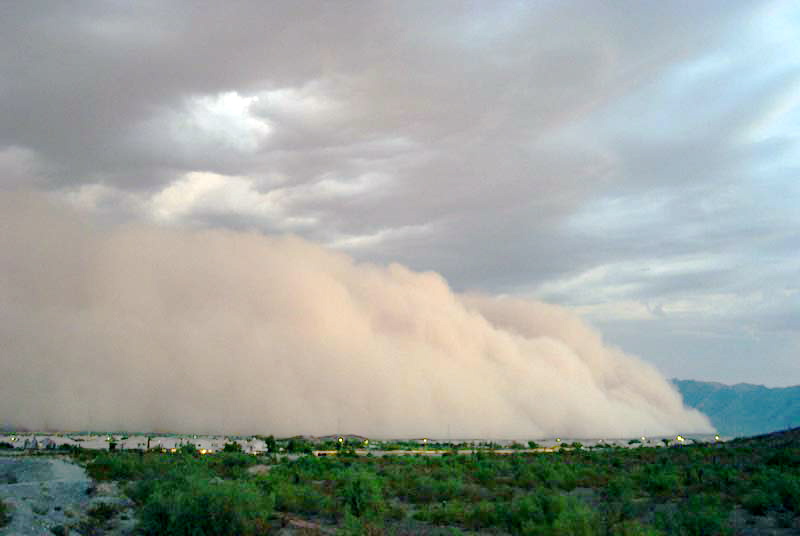
Photo: Junebug172 / public domain via Wikimedia Commons
In short
Arizona's claim-handling rule, A.A.C. R20-6-801, contains no deadline to pay a first-party claim. The payment clock is statutory, at A.R.S. § 20-462, and its interest penalty runs from the date the insurer received the claim rather than from the thirty-first day after proof of loss. A property policy's suit-limitation clause may run as short as one year from the date of the loss itself under A.R.S. § 20-1115(A)(3).
Read R20-6-801 straight through, subsection (A) to subsection (J), and you will not find a deadline to pay anything. The rule sets clocks for acknowledging a claim, for answering a Department inquiry, for accepting or denying after proofs of loss, and for the letters a carrier owes while an investigation drags on.1 Payment appears nowhere in it. Arizona's payment clock sits one title over in the statutes, it carries an interest penalty, and the penalty runs from the day the claim arrived rather than from the thirty-first day after proof of loss.2
Interest runs from the day the claim arrived
A.R.S. § 20-462(A) does its work in one sentence. A first-party claim not paid within thirty days after the insurer receives an acceptable proof of loss "which contains all information necessary for claim adjudication" carries interest at the legal rate "from the date the claim is received by the insurer."2 The legal rate is ten percent a year unless a different rate was contracted for in writing.3
Two clauses in that sentence do most of the work, and they pull opposite ways.
The first belongs to the carrier. Thirty days runs from an acceptable proof of loss containing everything needed to adjudicate, which is a standing invitation to argue that what you sent was neither acceptable nor complete. So enumerate the enclosures in the transmittal, date it, and send it by a method that proves delivery. An adjuster who can put a date and a contents list in front of a Department examiner has settled the question before it opens.
The second belongs to your insured, and it is more generous than the rest of the scheme would suggest. Interest does not begin on day thirty-one. It begins on the date the claim was received. A loss reported July 12 and paid November 3 accrues interest across all one hundred and fourteen days, not the eighty-four left once the grace period closes. A carrier treating § 20-462 as a late fee on the tail of a slow file has mispriced it by thirty days on every claim it touches.
Subsection (C)(5) is the way out. The section does not reach claims "denied in good faith within thirty days after receipt of acceptable proofs of loss."2 A quick denial costs the carrier nothing in interest. A slow anything costs it interest measured from the first day.
Working days and days are different words in this rule
The drafter of R20-6-801 alternated between two units and never defined either one. Subsections (E)(1), (E)(2), (E)(3), (E)(4), (G)(1)(a) and (G)(1)(b) all say "working days." Subsection (F) and the recurring letter obligation say "days."1 On a claim reported the Friday before Labor Day, that difference is roughly a week of real calendar, and it falls on the deadlines a public adjuster is most likely to be waiting on.
Subsection (F) is the one the secondary sources get wrong. It reads: "Every insurer shall complete investigation of a claim within 30 days after notification of a claim, unless the investigation cannot reasonably be completed within 30 days." Thirty calendar days, with an escape clause wide enough to drive a file through.1
Subsection (G)(1)(a) carries the decision. Within fifteen working days after the insurer receives properly executed proofs of loss, the first-party claimant "shall be advised of the acceptance or denial of the claim." A denial has to be in writing, a copy has to sit in the claim file, and no insurer may deny "on the grounds of a specific policy provision, condition, or exclusion unless reference to the provision, condition or exclusion is included in the denial."1 A denial letter that gestures at the policy without naming the clause is defective on the face of the rule. Ask for the corrected one in writing.
If the carrier needs longer, (G)(1)(b) makes it say so within the same fifteen working days, with reasons. After that the obligation becomes recurring: at forty-five days from the date of initial notification, and every forty-five days after, a letter setting out why more time is needed. On a stalled Arizona file their absence is the easiest violation in the rule to document. Suspected arson suspends both duties under (G)(1)(c).
Subsection (D) stops counting and starts constraining, and it repays a read before your next Arizona denial. Subsection (D)(4) bars an insurer from enforcing a notice or proof-of-loss time limit against a claimant to relieve itself of its obligations "unless the failure to comply with the time limit prejudices the insurer's rights," except where the policy itself specifies the limit, which puts prejudice rather than lateness at the centre of the argument about a late proof. Subsection (D)(3) bars denial for failure to exhibit damaged property unless the insurer asked and the claimant refused without a sound basis, so an unanswered inspection request is not the same thing as a refusal. Subsection (D)(6) bars partial-payment drafts carrying language that releases the insurer or its insured from total liability, the provision to quote when an undisputed advance arrives stamped with a release.1 Ohio builds its claim calendar out of an administrative rule the same way, and the Ohio deadlines this rule most resembles repay a side-by-side read.
| Clock starts when | Count | Unit | Authority |
|---|---|---|---|
| Insurer receives notification of a claim | 10 | working days | R20-6-801(E)(1) |
| Claimant sends a communication expecting a reply | 10 | working days | R20-6-801(E)(3) |
| Department sends the insurer an inquiry | 15 | working days | R20-6-801(E)(2) |
| Insurer receives notification of a claim (investigation) | 30 | days | R20-6-801(F) |
| Insurer receives properly executed proofs of loss | 15 | working days | R20-6-801(G)(1)(a) |
| Insurer needs more time after proofs of loss | 15 | working days | R20-6-801(G)(1)(b) |
| Investigation still open, from initial notification | 45, and every 45 after | days | R20-6-801(G)(1)(b) |
| A time limit may expire on an unrepresented first-party claimant | 30 before expiry | days | R20-6-801(G)(4) |
| Insurer receives an acceptable proof of loss (payment) | 30, then interest from date of receipt | days | A.R.S. § 20-462(A) |
| The event resulting in the loss occurs | 1 year, floor on any policy suit clause | days | A.R.S. § 20-1115(A)(3) |
Nobody gets to sue on any of it
The R20-6-801 clocks are not a cause of action, and the statute says so in terms. A.R.S. § 20-461(D): "Nothing contained in this section is intended to provide any private right or cause of action to or on behalf of any insured or uninsured resident or nonresident of this state. It is, however, the specific intent of this section to provide solely an administrative remedy to the director for any violation of this section or rule related to this section."4
So a missed fifteen-working-day decision does not hand your insured a claim. It hands you two other things.
One is the Department complaint, which has a mechanical virtue most complaints lack: an inquiry from the Department starts its own clock, and the insurer owes an adequate response within fifteen working days under (E)(2).1 Filing puts the carrier on a deadline it cannot argue about.
The other is the record. Arizona first-party bad faith runs on the Zilisch inquiry, and Zilisch is about conduct across the life of the file rather than the number at the end of it. The court held that "coming up with an amount that is within the range of possibility is not an absolute defense to a bad faith case," because the carrier "has an obligation to immediately conduct an adequate investigation, act reasonably in evaluating the claim, and act promptly in paying a legitimate claim," and "cannot lowball claims or delay claims hoping that the insured will settle for less."5 Fair debatability, the court added, is a necessary condition to avoid a bad-faith claim but not always a sufficient one.
Every missed date in the table above is an entry in that record. The rule supplies the dates; Zilisch supplies the use for them.

One year from the storm, and the clock nobody has started
A.R.S. § 20-1115(A)(3) fixes the floor for property policies: a suit-limitation clause may not run less than "one year from the date of occurrence of the event resulting in the loss," and an insurer may extend beyond a year in its policy provisions. Anything shorter is void under subsection (B).6
Read the trigger again. It is the occurrence, not the denial, and not the date your insured understood it. Arizona's six-year period for actions on a written contract under § 12-54810 is the number a general civil-limitations page will give you, and an enforceable one-year policy clause displaces it for the claim itself.
The bad-faith tort runs on a separate two-year period under § 12-542,11 and the Arizona Supreme Court restated its accrual rule in 2024: "first-party bad faith claims do not begin to accrue until an insurer intentionally and unreasonably issues a final denial of coverage because, as an essential element, a final denial is necessary to establish the existence of bad faith."7
Put the two together on a monsoon file. The contract clock started the night of the storm. The bad-faith clock has not started at all, because no final denial has issued. A carrier sending its fourth (G)(1)(b) letter at day 180 is running down a limitation period that began before it opened the file, while never triggering the one that would give your insured a tort. Subsection (G)(4) is the only thing in the rule aimed at that gap, and it reaches only a claimant who is "neither an attorney nor represented by an attorney."1
So the date of loss is the first thing to fix on an Arizona file. Arizona's losses are not spread evenly across the year. Across the eleven seasons from 2015 through 2025, 77.3 percent of the state's recorded property-relevant severe-weather events fell between June and September, and July and August alone carried 60.6 percent of them.8 A one-year clause measured from occurrence turns that into a matching expiry wave: the files opened in a July monsoon week are the files whose suit clauses close in a July week twelve months later, while the carrier is still corresponding.

What changed on September 12
SB1206 carried the 2026 session's general effective date, which fell on September 12.9 It rewrites A.R.S. § 20-321.02, and three of its prohibitions land on adjusters directly. An adjuster may not solicit representation "while a loss-producing occurrence is continuing at the damaged premises or while the fire department or any other public safety service is engaged in a public safety emergency response at the damaged premises." An adjuster may not participate "either directly or indirectly, including as contractor or subcontractor, in the restoration, reconstruction or repair of any damaged premises or property that is the subject of a claim adjusted by the adjuster." And an adjuster may not endorse a payment instrument without the insured's direct endorsement and signature.9
Two facts about Arizona licensing sit underneath that and surprise people who work other states. Arizona has no separate public adjuster licence. Section 20-321 defines one class of "adjuster," covering anyone who for compensation adjusts claims "on behalf of either the insurer or the insured," and § 20-321.01(A) requires a licence to act as or claim to be one. The catastrophe exemption in § 20-321.01(D) then reaches only an adjuster sent into the state "on behalf of an insurer," so an out-of-state policyholder-side adjuster arriving for monsoon work needs a resident licence or reciprocity under (C)(2), whatever the scale of the event.12
What Arizona does not give you is a statutory contract form, a fee cap, or a rescission window. Several directories assert a three-business-day right to cancel an Arizona public adjuster contract. No Arizona statute supplies one. The cancellation rights that do exist in this area sit in the residential-contractor statute, § 32-1158.02, and they run in favour of the insured homeowner, who gets four business days against the contractor.9 SB1206 also widened the licence itself: § 20-321 now reaches a person who directly or indirectly solicits business from, investigates, or advises an insured about claims on behalf of someone doing the adjusting, which pulls canvassers and unlicensed staff inside the licence.9 Texas built its own appraisal timetable into rules that still have not been adopted, and Arizona's silence on appraisal is the same problem arriving from the other direction: no statute and no rule set appraisal timing here, so the only schedule is whatever the policy form says.
Adjusters working multiple jurisdictions will recognise the shape. The New Jersey deadlines guide covers a suit-limitation regime that tolls where Arizona's does not appear to.
Does Arizona require an insurer to pay a property claim within 30 days?
No. R20-6-801 contains no payment deadline at all. A.R.S. § 20-462 does something different: if a first-party claim is not paid within thirty days after the insurer receives an acceptable proof of loss containing all information necessary for adjudication, the insurer owes interest at the legal rate, and that interest runs from the date the claim was received rather than from day thirty-one. Claims denied in good faith inside those thirty days are excluded.
How long does my insured have to sue an Arizona carrier on the policy?
It depends on the policy language, and the floor is short. A.R.S. § 20-1115(A)(3) lets a property policy limit suit to one year from the date of occurrence of the event resulting in the loss, and voids anything shorter. An insurer may extend beyond a year if it chooses. Read the clause on the declarations before assuming the six-year written-contract period in § 12-548 applies.
Can I sue a carrier for blowing the R20-6-801 deadlines?
No. A.R.S. § 20-461(D) states that nothing in the section provides any private right or cause of action, and that the intent is to provide solely an administrative remedy to the director. The missed deadlines are evidence and the basis of a Department complaint, not a claim in themselves.
Are the 10-day and 15-day counts business days or calendar days?
Both units appear, and the rule defines neither. Subsections (E)(1) through (E)(4), (G)(1)(a) and (G)(1)(b) say working days. Subsection (F)'s 30-day investigation period, the recurring 45-day letters, and the (G)(4) notice periods say days.
When does the bad-faith clock start in Arizona?
On the insurer's final denial of coverage. The Arizona Supreme Court restated in 2024 that a first-party bad-faith claim does not accrue until an insurer intentionally and unreasonably issues a final denial, because a final denial is an essential element. The period is two years under A.R.S. § 12-542.
Do I need an Arizona licence to work a monsoon claim as a public adjuster?
Yes. Arizona licenses a single class of adjuster under A.R.S. § 20-321, with no separate public adjuster licence, and § 20-321.01(A) requires a licence to act as or claim to be one. The catastrophe exemption in § 20-321.01(D) covers only adjusters sent into the state on behalf of an insurer, so it does not help a policyholder-side adjuster coming in from out of state.
Sources cited
- Ariz. Admin. Code § R20-6-801, Unfair Claims Settlement Practices (amended by final rulemaking at 29 A.A.R. 3621, eff. Jan. 7, 2024)— Legal Information Institute, Cornell Law School
- A.R.S. § 20-462, Timely payment of claims— Arizona State Legislature
- A.R.S. § 44-1201, Rate of interest for loan or indebtedness— Arizona State Legislature
- A.R.S. § 20-461, Unfair claim settlement practices— Arizona State Legislature
- Zilisch v. State Farm Mut. Auto. Ins. Co., 196 Ariz. 234 (2000)— Arizona Supreme Court
- A.R.S. § 20-1115, Void policy restrictions— Arizona State Legislature
- Satamian v. Great Divide Ins. Co., No. CV-23-0085-PR (Ariz. Apr. 9, 2024)— Arizona Supreme Court
- Storm Events Database, Arizona records 2015-2025— NOAA National Centers for Environmental Information
- SB1206, storm related insurance claims; adjusters, Laws 2026, ch. 157 (57th Leg., 2d Reg. Sess.)— Arizona State Legislature
- A.R.S. § 12-548, Contract in writing for debt; six year limitation— Arizona State Legislature
- A.R.S. § 12-542, Injury to property; two year limitation— Arizona State Legislature
- A.R.S. § 20-321.01, Adjuster licence required; qualifications; catastrophe exemption— Arizona State Legislature
Statutory clocks, tracked on every file.
claimOS calendars these deadlines automatically on each claim: acknowledgement, decision, payment, and the suit limitation, each with its code section attached and visible to the whole team.