

Eighth Circuit
Minnesota Matching After Jamestown Villas: The Panel Decides
A $52,482.81 award decided a color-match question no appraiser ever wrote down, and Minnesota law gave a reviewing court nothing to measure it against.
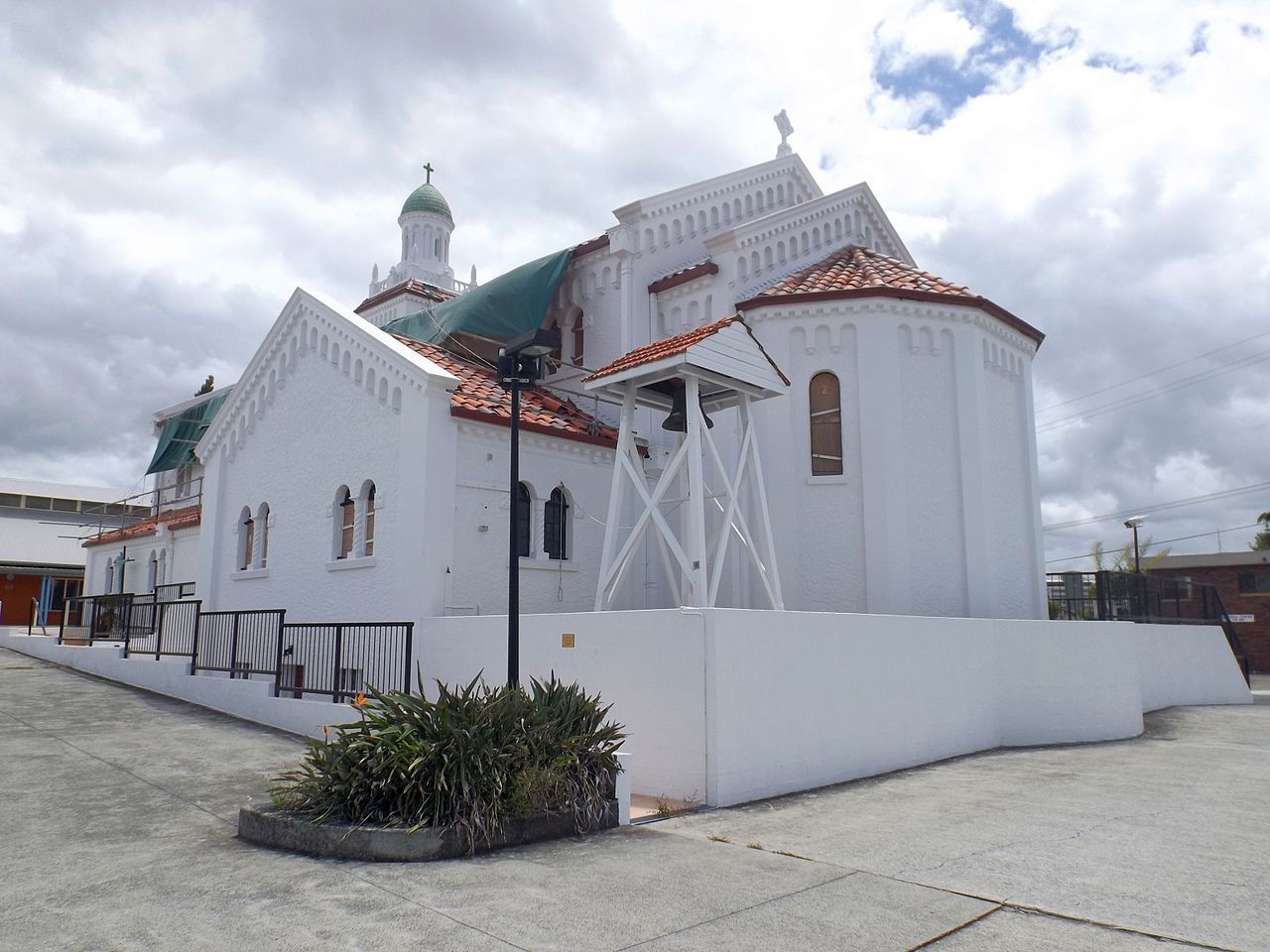
Photo: FEMA / Win Henderson
In short
In Jamestown Villas HOA v. State Farm (8th Cir. Sept. 4, 2026), the court held that an appraisal panel's determination of the amount of loss necessarily decides whether replacement shingles are of "like kind and quality," making color match a nonreviewable question of fact. Minnesota has no matching statute, so that standard exists only in the policy phrase. A public adjuster's leverage sits in the scope record and in getting matching itemized as a discrete finding inside the award.
An appraisal panel handed a Minnesota condominium association $52,482.81 to repair hail-damaged roof-valley metals and the shingles that had to come off to reach them, and on September 4, 2026 the Eighth Circuit read a color-match finding into that number that no appraiser ever wrote down.1 The association had asked for a full reroof of nine buildings, a job both sides agreed would cost $742,163.80.1 Judge Stras called the dispute one with "a simple answer": "[u]nder Minnesota law, the insurer does not have to pay a penny more."1 No Minnesota statute told those appraisers how close a replacement shingle has to come in color. Nothing supplied a standard except the policy phrase "like kind and quality" and three appraisers' judgment about it, and once that judgment left the room as a single dollar amount, no court was going to look behind it.1
Jamestown Villas Homeowners Association v. State Farm Fire and Casualty Co., No. 25-3154, was decided September 4, 2026 and is published, so it binds every district court in the circuit.1 As of this writing no petition for rehearing has been reported and the rehearing window has not closed, which makes this the current state of Eighth Circuit law rather than a settled one.
The loss was ordinary. Hail hit the roof-valley metals on nine condominium buildings, and shingles mattered only because reaching the metals means pulling shingles.1 "[T]he sticking point was the availability of replacement materials of 'like kind and quality,'" or in the court's four words, "How close was close enough?"1
What $52,482.81 decided without saying so
The award is 7.07 percent of the figure both sides accepted for a full reroof.1 It issued 2-1, and the appraiser who wanted to award more was Jamestown's own.1
Judge Frank sent clarifying questions to the appraisers. The answers conflicted. State Farm's appraiser attributed the difference to "[s]hading," "[f]ading," and variation in "[d]ye lots"; the umpire attributed it to "difference[s] in granulation[,] dye lots[,] . . . . exposure to the sun[,] or different shadow lines."1 The Eighth Circuit needed one sentence for both: "These answers were confusing because all the replacement shingles were the same."1

Footnote 2 says the detour should never have happened. "In fact, this case should have been over at the start. In the absence of ambiguity, the district court never should have sent clarifying questions to the appraisers. . . . The extra step ended up making no difference, however, because the court confirmed the award once it saw the answers."1 Ambiguity discovered after an award buys delay rather than leverage.
Because the panel decided "the 'amount of [the] loss,'" it necessarily settled whether the available replacement shingles were close enough to be of "like kind and quality." "Or else the panel would have awarded more."1
Eight words, and the appeal turns on them.
Clarification had been unnecessary from the start: "Neither the panel nor the district court needed to ask a single clarifying question to know the award had to be for just the replacement of the roof-valley metals and the surrounding shingles, regardless of what the individual panel members thought."1 Whether shingles are a "reasonable color match" sits among the "nonreviewable factual questions," a "mere incident[] to a determination of the amount of loss or damage."1 A hail file can turn on a characterization nobody wrote down, the way cosmetic-damage exclusions operate on newer roofs.
Minnesota has no matching statute
Ask where a Minnesota appraiser finds a color standard and the answer is the policy, and only the policy. The three sections routinely cited for a matching rule say something else. Minn. Stat. § 65A.10 is titled "Limitation," governs code-mandated rebuilding and relocation, and its partial-loss sentence runs the other direction, applying "only to the damaged portion of the property."10 Section 65A.28 is "Disclosure and Filing Requirements," annual zip-code reporting.15 Section 72A.201 is "Regulation of Claims Practices," and its subdivision 8a is titled "Chemical dependency claim reviewer qualifications"; the phrase "uniform appearance" appears zero times across that section's 36,411 characters.9
All three circulate online as Minnesota's matching statute. The state has none. The closest analog is § 72A.201, subd. 5(8), which forbids settling a replacement-value claim "for less than the sum necessary to replace the damaged item with one of like kind and quality," saying nothing about color, and running through the commissioner rather than a courtroom.9
"Reasonably uniform appearance" does appear in the case, as the appraisal panel's own self-posed clarification question.1 The formula belongs to the NAIC model regulation and the states that adopted it, so the phrase entered a Minnesota appraisal from other states' regulations, with no Minnesota law behind it.
No rule defines the match, so matching lives inside a contract term, and a disputed term of that kind is a "mere incident" to the amount of loss, which under Quade v. Secura Insurance, 814 N.W.2d 703, 707 (Minn. 2012), belongs to the appraisers.1 They answer by writing a number, a number carries no reasoning, and a reviewing court has nothing to measure.
In a regulation state the chain breaks at that last link. Iowa requires replacing as much of the item as necessary "to result in a reasonably uniform appearance within the same line of sight." Iowa Admin. Code r. 191—15.44(507B), subrule 15.44(1)"b".11 Ohio requires replacing "as much of the item as to result in a reasonably comparable appearance." Ohio Admin. Code 3901-1-54(I)(1)(b).12 California and Kentucky carry their own versions, at 10 CCR § 2695.9(a)(2) and 806 KAR 12:095 § 9(1)(b), and all of them descend from NAIC Model Regulation 902 § 9(A)(2).131614
The model and Ohio's adoption of it both disclaim any private cause of action, so none of this hands a policyholder a claim to file.1214 What a regulation supplies is an external referent a judge can hold an award up against. Minnesota supplies none, which is why the number a Minnesota panel writes down is the only matching finding a reviewing court ever sees.
Cedar Bluff cuts both ways
Cedar Bluff Townhome Condominium Association v. American Family Mutual Insurance Co., 857 N.W.2d 290 (Minn. 2014), gets cited in demand letters as the decision that made matching compensable in Minnesota.3 Its panel found siding that "could not be matched in terms of color," concluded "there was not a reasonable match available," and awarded $361,108 for total siding replacement.3 The Minnesota Supreme Court held that "comparable material and quality" requires "something less than an identical color match, but a reasonable color match nonetheless," then deferred to "the appraisal panel's factual determination as to the amount of loss." 857 N.W.2d at 296.3
One body of law produced $361,108 for a policyholder in 2014 and $52,482.81 against one in 2026.31 The variable was never the doctrine, but the finding each panel made and whether it was put somewhere legible. Under Quade, appraisers may not "construe the policy or decide whether the insurer should pay." 814 N.W.2d at 706.1
| Case | Year | Matching before the panel | What survived review |
|---|---|---|---|
| Quade v. Secura Ins. (Minn.) | 2012 | Not at issue | Appraisers own the amount of loss and its mere incidents, not policy construction |
| Trout Brook South Condo. Assn v. Harleysville Worcester (D. Minn.) | 2014 | Never submitted | Award did not bar the suit; matching left to a jury |
| Cedar Bluff Townhome Condo. Assn v. American Family (Minn.) | 2014 | Decided and itemized | $361,108 for total siding replacement, confirmed |
| Fenske v. Integrity Prop. and Cas. (D. Minn.) | 2023 | Conditional line on the award | Award ambiguous, returned to the panel; insured bore the burden and failed to meet it |
| Meadows of Bloomfield Assn v. State Farm (Minn. Ct. App., nonprecedential) | 2023 | Decided and itemized | $1,862,000 shingle award affirmed |
| Cincinnati Ins. Co. v. Rymer Cos. (8th Cir.) | 2026 | Not at issue | Clarification power confirmed; the clarified award was enforced |
| Jamestown Villas HOA v. State Farm (8th Cir.) | 2026 | Decided inside the number | $52,482.81 affirmed; color match held nonreviewable |
One policyholder in that table kept matching alive as a reviewable question, by accident of procedure. In Trout Brook South Condominium Association v. Harleysville Worcester Insurance Co., matching was never submitted to the panel, so the award, and the 90-day window to challenge it, "simply does not bar Trout Brook's causes of action," and "a jury must determine whether these terms obligate Harleysville to pay for matching shingles."7
Where a panel decided matching explicitly and itemized it, the policyholder won and the number held. Meadows of Bloomfield Association v. State Farm, No. A22-1775 (Minn. Ct. App. Aug. 7, 2023), is nonprecedential and therefore persuasive rather than binding. Its panel found the replacement shingles "were not a reasonable match" and awarded $1,862,000 to replace every shingle on top of $753,289 for soft metals.5 How hail claims get scoped inside a carrier has been pried into public view before, but a panel finding stated as its own line item is a different instrument from an argument in a brief.
Where the panel produced a bare or conditional number, the policyholder lost the point. Fenske v. Integrity Property & Casualty Insurance Co. (D. Minn. Jan. 13, 2023) is the conditional version. The panel handwrote at the bottom of the award, "If matching is considered the cost of the entire roof is" $155,000.00, against the $20,600 the insurer had already paid for the damaged 7.5 percent of a garage roof.6 The court found both readings reasonable, called the award ambiguous, and returned it to the panel rather than entering judgment.6
Cincinnati Insurance Co. v. Rymer Cos., 170 F.4th 1159 (8th Cir. Mar. 27, 2026), confirmed that a district court may return an ambiguous award to the panel for clarification under Minnesota law.2 Courts still diverge over whether matching is an amount-of-loss question for appraisers or a coverage question for judges, a divergence running through state and district decisions rather than any certified split among the circuits.
Where the clarification rule came from
Jamestown cites exactly one statute: Minn. Stat. § 572B.20(d)(3), a Uniform Arbitration Act provision.1 The section is headed "Change of Award by Arbitrator," and subsection (d)(3) lets a court submit a claim to the arbitrator "to clarify the award."8 The word "ambiguous" appears zero times in § 572B.20.8 The "only ambiguous awards require resubmission" limit traces instead to Mork v. Eureka-Security Fire & Marine Insurance Co., 42 N.W.2d 33, 38 (Minn. 1950), and its "every presumption of validity."1
Oliver v. State Farm Fire & Casualty Insurance Co., 939 N.W.2d 749, 752-53 (Minn. 2020), held that the Uniform Arbitration Act does not apply to appraisals under the Minnesota standard fire policy.4 Rymer, decided six months before Jamestown by the same author, said as much in its own footnote 2: courts had long located the clarification power in the arbitration act, "No longer, however, given a recent Minnesota Supreme Court decision ruling out the possibility," citing Oliver, and grounded the power in common-law remand practice instead.2
So a published circuit rule rests, on its face, on a statute the same judge had recently described as inapplicable to appraisals. The tension is there for anyone briefing a clarification fight in the District of Minnesota, though what a court would do with it is open.
Before the number exists
All of this points at one window, and it closes when the panel signs.
Start with the scope record, because a panel cannot itemize what nobody documented. Roof-valley metals, the shingles disturbed to reach them, the planes and elevations inside each line of sight, counts, and photographs keyed to each. A disciplined scope write-up is the raw material for a finding with edges on it.
Then carry the proof Fenske's policyholders lacked. They lost summary judgment because they "failed to satisfy their burden of showing that no color-matching tiles exist" and had "not submitted any affidavits, brochures, or other documents."6 The proof is documentary and obtainable: manufacturer discontinuation notices, dye-lot records, distributor and supplier affidavits on regional availability, sample boards photographed in daylight on the actual slope.
Then ask the appraisers for what the Jamestown panel never produced, which is matching stated as a discrete factual finding with its own dollar line. Not a footnote, not a conditional sentence at the bottom of the form. The Meadows panel did that, and the finding survived review because a court could see it without asking.5
A bare number gets read the way Jamestown read $52,482.81, as a complete answer that necessarily rejected the larger scope.1 A contingent number gets read the way Fenske read $155,000.00, as an ambiguity worth another trip to the panel and several more months.6
The rule is narrow and procedural: in the Eighth Circuit, applying Minnesota law, a panel's determination of the amount of loss carries the color-match finding inside it whether or not anyone writes that finding down.1 Jamestown does not construe § 65A.10, does not create a matching standard, and does not resolve whether matching is coverage or valuation.1 The opinion issued September 4, 2026, no petition for rehearing has been reported as of this writing, and the rehearing window remains open.1
Questions from the field
Does an appraisal award decide matching in Minnesota?
Yes. The Eighth Circuit held in Jamestown Villas that by deciding the amount of loss, an appraisal panel necessarily decided whether the available replacement shingles were close enough to be of “like kind and quality.” The court reasoned that the panel would have awarded more if it had found otherwise, and treated whether shingles were a “reasonable color match” as a nonreviewable question of fact.
Does Minnesota have a matching statute?
No. Minn. Stat. § 65A.10 is titled “Limitation” and covers code-mandated rebuilding and relocation, § 65A.28 is an annual zip-code disclosure and filing rule, and § 72A.201 regulates claims practices generally. All three circulate online as Minnesota’s matching statute, and none of them sets a color or appearance standard. The closest analog is § 72A.201, subd. 5(8), an administratively enforced unfair-settlement-practice prohibition that repeats the phrase “like kind and quality” without defining it.
Does Cedar Bluff guarantee payment when siding or shingles cannot be color matched?
No. Cedar Bluff turned on what the appraisal panel found. The panel there concluded that no reasonable match was available and awarded $361,108 for total siding replacement, and the Minnesota Supreme Court deferred to that factual determination. The same deference rule produced a $52,482.81 award against a policyholder in Jamestown Villas.
Can a district court send an appraisal award back to the panel for clarification?
Yes, but only if the award is ambiguous. Cincinnati Insurance Co. v. Rymer Cos. confirmed the power exists under Minnesota law, and Jamestown Villas held that an unambiguous award should never have been sent back at all. In Jamestown Villas the district court asked clarifying questions, received inconsistent answers about shading, fading and dye lots, and confirmed the award anyway.
What happens when a panel writes a conditional matching figure on the award?
It depends on how a court reads the two numbers. In Fenske v. Integrity Property and Casualty, the panel handwrote “If matching is considered the cost of the entire roof is” $155,000.00 above an award covering the damaged 7.5 percent of a garage roof. The court found both readings reasonable, called the award ambiguous, and returned it to the panel rather than entering judgment.
Is Jamestown Villas final?
No. The opinion was filed September 4, 2026 and is published, so it binds district courts in the Eighth Circuit. As of this writing no petition for rehearing has been reported and the rehearing window has not closed.
Sources cited
- Jamestown Villas Homeowners Ass'n v. State Farm Fire & Cas. Co., No. 25-3154 (8th Cir. Sept. 4, 2026)— U.S. Court of Appeals for the Eighth Circuit
- Cincinnati Ins. Co. v. Rymer Cos., LLC, 170 F.4th 1159, No. 24-3356 (8th Cir. Mar. 27, 2026)— U.S. Court of Appeals for the Eighth Circuit
- Cedar Bluff Townhome Condo. Ass'n v. American Family Mut. Ins. Co., 857 N.W.2d 290, No. A13-0124 (Minn. Dec. 17, 2014)— Minnesota Judicial Branch, State Law Library
- Oliver v. State Farm Fire & Cas. Ins. Co., 939 N.W.2d 749, No. A18-0367 (Minn. Mar. 4, 2020)— Minnesota Judicial Branch, State Law Library
- Meadows of Bloomfield Ass'n v. State Farm Fire & Cas. Co., No. A22-1775 (Minn. Ct. App. Aug. 7, 2023) (nonprecedential)— Minnesota Judicial Branch, State Law Library
- Fenske v. Integrity Prop. & Cas. Ins. Co., No. 0:22-cv-00679 (D. Minn. Jan. 13, 2023)— U.S. Government Publishing Office
- Trout Brook South Condo. Ass'n v. Harleysville Worcester Ins. Co., No. 0:12-cv-02888 (D. Minn. Feb. 5, 2014)— U.S. Government Publishing Office
- Minn. Stat. § 572B.20, Change of Award by Arbitrator— Minnesota Office of the Revisor of Statutes
- Minn. Stat. § 72A.201, Regulation of Claims Practices— Minnesota Office of the Revisor of Statutes
- Minn. Stat. § 65A.10, Limitation— Minnesota Office of the Revisor of Statutes
- Iowa Admin. Code r. 191—15.44(507B), subrule 15.44(1)"b"— Iowa Legislature
- Ohio Admin. Code 3901-1-54, Unfair Property/Casualty Claims Settlement Practices— Ohio Laws and Administrative Rules
- Cal. Code Regs. tit. 10, § 2695.9, Fair Claims Settlement Practices Regulations— Barclays Official California Code of Regulations
- Unfair Property/Casualty Claims Settlement Practices Model Regulation (MDL-902), § 9(A)(2)— National Association of Insurance Commissioners
- Minn. Stat. § 65A.28, Disclosure and Filing Requirements— Minnesota Office of the Revisor of Statutes
- 806 KAR 12:095 § 9(1)(b), Unfair Claims Settlement Practices— Kentucky Legislative Research Commission
Built for where claims are going.
Carrier automation is not slowing down. claimOS gives the recovery side the same leverage: AI drafting grounded in the file, weather evidence on demand, and a record that holds up under review.