

Catastrophe data
70.3% of Closed Isaias Claims Closed Without Payment at Day 11
Day-11 Isaias claim data from FLOIR, and why the October 20 snapshot is the one to save before it overwrites.
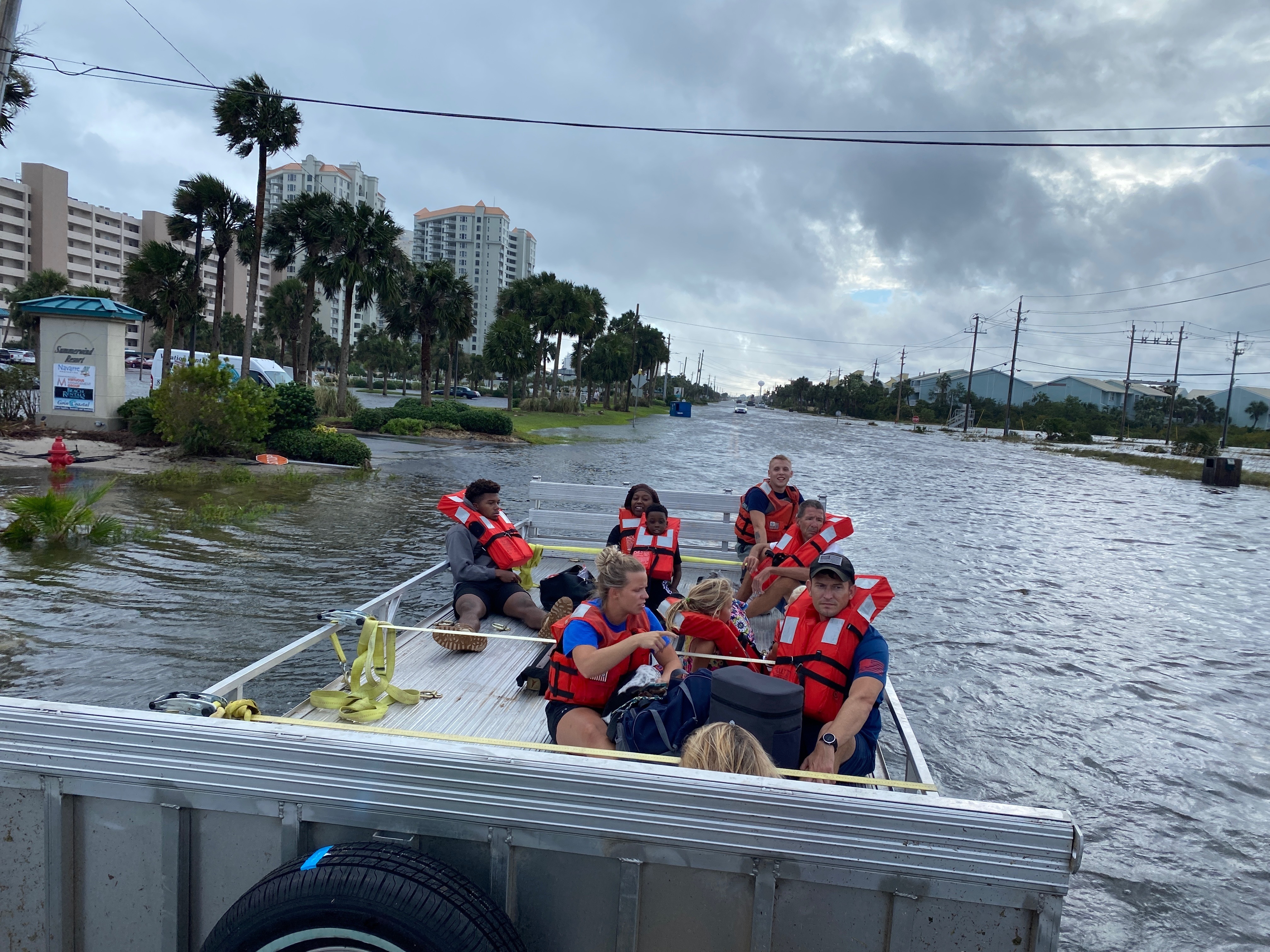
Photo: National Weather Service via Wikimedia Commons
In short
FLOIR data as of October 20, 2026, eleven days after Hurricane Isaias struck the Florida Panhandle, shows 11,968 of 54,797 claims closed and 8,413 of those, 70.3%, closed without payment. Administrative reasons account for 6,355, a reporting category OIR first required in 2026. Hurricane Sally's only published vintage, at day 40, shows 32.9%, so the two snapshots are not day-matched. No FEMA major disaster declaration exists for Isaias; Florida's request is pending.
Eleven days after landfall, Florida carriers had closed 11,968 Isaias claims and paid on 3,555 of them.1 The other 8,413 closed without payment, 70.3% of everything closed, on data as of October 20, 2026.1 Another 41,375 claims sit open with no payment yet.1
FLOIR's table for those 8,413 sums exactly: administrative reasons 6,355, covered damage below deductible 1,203, other coverage exclusions or no policy in force 694, no flood coverage 161, fraud 0.1 A federal declaration would not fix that 161, as Indiana showed in August. Administrative reasons carries three-quarters of that category.1 OIR only added the line to the form this year.5 FLOIR's footnote: "Administrative reasons may include, but are not limited to, insured inquiry only, claim withdrawn by insured, duplicate claim or claim opened in error, incorrect date of loss, or lack of cooperation/communication by insured."1 Most of that list is housekeeping. Lack of cooperation or communication is a handling finding, and a dated contact log rebuts it. Another 1,203 closures came in under the deductible, typically a named-storm or hurricane deductible on a Panhandle homeowners policy, a trigger that can turn on the warning rather than the wind, so read the trigger language off the declarations page before accepting a below-deductible closure as arithmetic.1
The data call runs under Fla. Stat. 624.307, with reporting deadlines of October 13 and 15.1
Santa Rosa holds 26,297 claims at a 17.2% closure rate, Escambia 16,690 at 25.4%.1 Between them that is 42,987 claims, 78.4% of the statewide total, and the biggest book is moving slowest.1
Day 11 against day 40
FLOIR's historical table carries one late-cycle Sally vintage, dated October 26, 2020, forty days after its September 16 landfall. It shows 43,757 of 71,998 claims closed, 14,375 of them without payment, 32.9%.2 Sally's estimated insured losses came in at $576,943,637 against Isaias's $581,980,952, inside one percent, on a claim count 31% larger.21 Day 11 against day 40 is not a day-matched comparison. Read 32.9% as where that book landed a month later. Sally's table carries no reason-code breakdown at all.2
No major disaster declaration exists for Isaias. The federal record holds only emergency declarations from October 9, 2026: EM-3655 in Florida across 27 designated areas, plus EM-3656 in Alabama and EM-3657 in Georgia, all Public Assistance.3 Florida's major-disaster request went in October 15, seeking roughly $237 million in Public Assistance across 15 counties, with preliminary assessments finding nearly 1,000 damaged residences in eight counties that could qualify for Individual Assistance if approved.4 The request is pending. One conflict before you quote either source: FLOIR's page says FEMA has activated Individual Assistance, while FEMA's record for EM-3655 shows it undeclared.13 Cite the federal record.
Early in a cycle these counts run high for reasons unrelated to carrier intent, and the table says nothing about any single file. Screenshot the page while it still reads October 20, 2026. It gets overwritten as carriers report, and a dated baseline is the cheapest way to measure one file against the book thirty days out.1
Will the FLOIR Isaias page change after October 20, 2026?
Yes. The catastrophe page updates as carriers report under the Fla. Stat. 624.307 data call, replacing the prior snapshot, so save or screenshot the October 20, 2026 vintage if you want a baseline to measure a file against in thirty days.
Does 70.3% closed without payment mean carriers are denying Isaias claims at scale?
No. FLOIR defines a closed claim without payment as a claim determined not to be payable by the reporting insurer at the time of reporting, and 6,355 of the 8,413 fall under administrative reasons. FLOIR's footnote for that bucket lists, non-exhaustively, insured inquiry only, claims withdrawn by the insured, duplicates, claims opened in error, incorrect dates of loss, and lack of cooperation or communication by the insured. Only the last of those is a handling finding. The 70.3% is day-11 pace on data as of October 20, 2026.
Is the Isaias-to-Sally comparison day-matched?
No. The Isaias figure is day 11, on data as of October 20, 2026, and the Sally figure is day 40, on data as of October 26, 2020, because FLOIR publishes one late-cycle vintage for Sally. Sally's book was also 31% larger by claim count, and its table carries no reason-code breakdown, so its 32.9% cannot be split by reason.
Should a below-deductible closure be re-examined?
It depends. 1,203 Isaias closures were coded covered damage below deductible as of October 20, 2026. On a Panhandle homeowners policy that is typically a named-storm or hurricane deductible, so pull the declarations page: if the deductible trigger, the date of loss, and the declared limit do not line up, the closure should be re-examined.
Sources cited
- Hurricane Isaias catastrophe claims data, data as of October 20, 2026— Florida Office of Insurance Regulation
- Catastrophe claims data and reporting: Hurricane Sally, data as of October 26, 2020— Florida Office of Insurance Regulation
- Disaster Declarations Summaries: EM-3655, EM-3656 and EM-3657, declared October 9, 2026— Federal Emergency Management Agency
- Hurricane Isaias leaves $582M in insured damage; state seeks $237M from FEMA— Florida Phoenix
- Isaias: 47,000 Claims and $582M in Losses in Florida So Far, OIR Reports— Insurance Journal
Built for where claims are going.
Carrier automation is not slowing down. claimOS gives the recovery side the same leverage: AI drafting grounded in the file, weather evidence on demand, and a record that holds up under review.