
Workflow — mold and fungi claims
Mold Claim Documentation: Air Sampling, Containment, and the Sworn Proof of Loss
The growth is gone and the containment is in a landfill by the time anyone reviews the claim. What survives is the record you built while the work was happening.
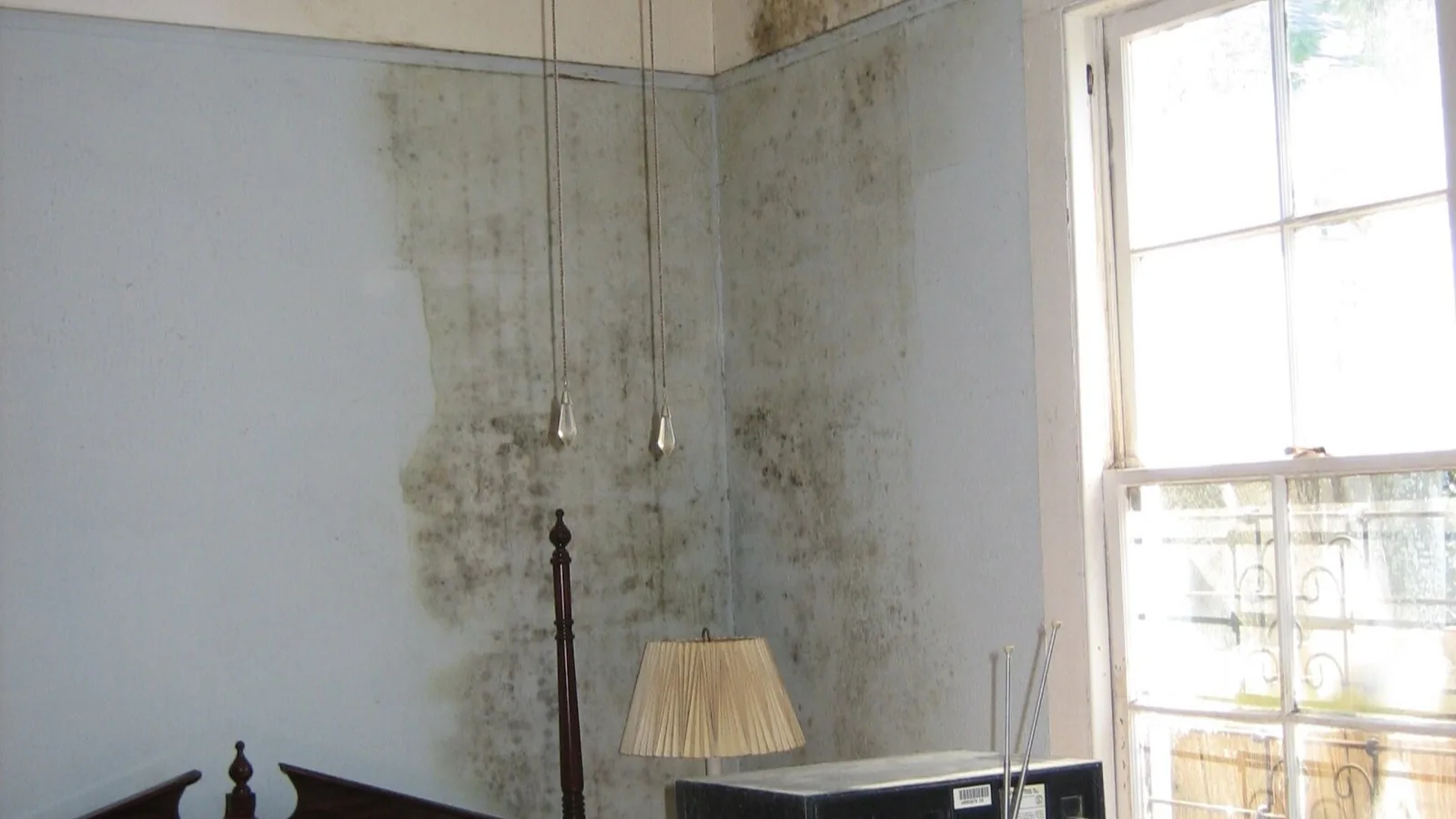
Photo: Infrogmation of New Orleans / Wikimedia Commons — CC BY 2.5
In short
How public adjusters document mold claims: EPA containment tiers, outdoor control air samples, independent clearance, the Texas MDR-1 certificate, and the notice clocks that bar late claims.
The plumber opened the wall on a Tuesday. By Friday the homeowner in Pinellas County had a $9,400 remediation invoice, a musty back bedroom, and a carrier that paid the $9,400 against the fungi sublimit and closed the file. Eleven miles away, a nearly identical failure — a split braided supply line under a bathroom vanity — closed at $61,000 across dwelling repair, remediation, contents, and additional living expense. Same peril, same carrier, same policy form. The difference was never the mold. One file could prove where the growth was, how much of it there was, and that it was gone. The other file had four photos and a receipt.
Mold is the only loss category where the carrier gets to argue about a thing that no longer exists by the time anyone reviews the claim. The drywall is in a dumpster. The containment came down three weeks ago. What survives is the record you built while the work was happening — and if that record was assembled after the fact, it shows.
The sublimit is a policy question, not a statute question
Before you write a sampling protocol into the scope, settle whether the number everyone repeats even applies.
Search "Florida mold sublimit" and you will find page after page asserting that the $10,000 cap is authorized under § 627.7011(2). Pull the statute. Section 627.7011 governs the insurer's obligation to offer replacement cost coverage and law and ordinance coverage — 25 percent of the dwelling limit deemed included unless the policyholder signs a written refusal, 50 percent if selected. It does not mention mold, fungi, or bacteria anywhere in its text. The sublimit lives in the form, in a Limited Fungi, Wet or Dry Rot, or Bacteria endorsement your insured either bought up or did not. Read the declarations page, not the blog posts.
That distinction decides the file. The question you answer on day one is whether the mold is the loss or a consequence of the loss. Wet drywall, saturated insulation, a swollen subfloor, and the tear-out required to reach the failed supply line are direct physical damage from a covered water discharge. Those line items belong against the dwelling limit. The fungi endorsement covers the mold-specific work: containment, negative air, HEPA, the assessment, the clearance test. A carrier will route the entire loss into the sublimit bucket if you let it. Sorting the estimate into those two columns before the desk adjuster does is the highest-leverage hour in the claim.
Containment tells you what your documentation has to prove
The EPA's remediation guidance for schools and commercial buildings is the closest thing this industry has to a shared reference, and it does one genuinely useful thing: it ties scope to square footage. Under 10 square feet is a cleanup. Between 10 and 100 square feet calls for limited containment — a single layer of 6-mil fire-retardant polyethylene, slit entry with a covering flap, area held under negative pressure. Above 100 square feet calls for full containment: double poly, a decontamination chamber with an airlock, PPE worn through the final HEPA vacuuming.
The billing follows the tier. So does the burden. If your remediator built full containment on a 140-square-foot ceiling cavity and the file cannot demonstrate 140 square feet, the desk adjuster pays limited containment and dares you to argue it.
| Tier | Scope trigger | What the file must show |
|---|---|---|
| Cleanup | Under 10 sq ft | Moisture readings at discovery, photos of the affected surface, source-of-water repair invoice |
| Limited containment | 10–100 sq ft | Measured affected area, single-layer 6-mil poly at the entry, negative-pressure photo, HEPA unit make and runtime |
| Full containment | Over 100 sq ft | Measured area with a sketch, double poly, airlock/decon chamber photo, daily logs, waste manifest for double-bagged materials |
The EPA's own field test for negative pressure is the one worth photographing. The polyethylene should billow inward. If it flutters outward, containment has been lost. One timestamped photo of inward-drawn poly at the containment entry defeats more supplement denials than a page of narrative.
Air sampling: the outdoor control is the whole ballgame
There is no federal threshold for airborne mold. The EPA says so outright — no federal regulations or standards exist for airborne mold concentrations, and sampling cannot be used to check a building against a federal number. Carrier consultants know this and lead with it: no standard was exceeded, because no standard exists.
The counter is the comparison, not the count. The EPA's stated finish condition is that after remediation, the types and concentrations of mold indoors should be similar to those in the local outdoor air. That single sentence makes the outdoor control sample the load-bearing element of the entire sampling package — and it is the element most often missing. The EPA lists omitted outdoor control samples among the standard failures of sampling done by inexperienced personnel, right alongside inconsistent protocols and contaminated cassettes.
So the pre-remediation sampling event has a fixed shape. An outdoor control taken upwind of the structure, same day, same pump, same cassette lot. An interior sample in each affected room. An interior control in an unaffected room in the same building. Spore counts by genus from an AIHA-accredited lab, chain of custody attached. Photograph the pump, the cassette, and the sampling location before you break it down. The lab report is not the evidence. The report plus the control plus the chain of custody is the evidence.
Post-remediation verification counts only when the assessor is independent of the remediator. In Texas that is not a preference — it is the license structure.
Texas wrote the paper trail into law. Build it anyway.
Texas licenses mold assessment consultants and mold remediation contractors separately under Occupations Code Chapter 1958, and the consultant who wrote the pre-remediation protocol cannot be the party who certifies clearance on the same job. When the work is finished, an independent licensed consultant or a licensed adjuster issues a Certificate of Mold Damage Remediation on TDI form PC326 MDR-1.
That certificate is not ceremony. Under 28 Texas Administrative Code § 21.1007(e), an insurer may not use an underwriting guideline based on previous mold damage or a previous mold claim if the property was remediated under Chapter 1958, inspected by a licensed mold assessment consultant, and issued an MDR-1 certifying with reasonable certainty that the underlying cause of the mold was remediated. The document is what keeps your client's next renewal from being priced as a stigmatized risk.
You may never write a Texas file. Build the Texas structure anyway: a written protocol from an assessor who did not perform the work, remediation executed against that protocol, clearance from a third party, and a signed certificate stating the moisture source was corrected. That chain holds up in any state, and it is precisely the chain a carrier's mold consultant looks for when deciding whether this file is worth fighting.
The Texas Department of Insurance also states the notice trap in plain language: water damage hidden from view usually must be reported within days after the insured first sees it. Mold is discovered late by definition. The clock that kills mold claims is the notice clock, not the remediation clock.
The sworn proof of loss is where the file holds or it doesn't
By the time you sit down to the sworn proof of loss, the growth is gone and the containment is in a landfill. A sworn statement on a mold file is a sworn statement about things that no longer exist. It either rests on a documented chain — moisture readings, assessment, protocol, daily logs, clearance report, certificate — or it rests on your recollection, under oath, against a carrier that has your remediator's invoice and nothing else.
Three failures show up over and over. The affected area was never measured before demolition, so the containment tier is unprovable. The outdoor control sample was skipped, so the clearance report says nothing a carrier has to accept. And the moisture source repair was never separately invoiced, so the file cannot show the cause was corrected — which is the one thing every mold certificate in the country asks the signer to attest.
Florida bars a claim outright unless notice reached the insurer within one year of the date of loss, and bars a supplemental claim unless notice was given within 18 months. On a mold file, the date of loss is the water event, not the day someone smelled the back bedroom. That year burns quietly while a homeowner runs a dehumidifier and hopes. The same discipline that produces a defensible drying log on a water mitigation file is what produces a mold file that survives — capture at the moment of the work, not reconstruction at the moment of the demand.
Firms that run this well do not have better remediators. They have a claim record where the moisture reading, the protocol, the containment photo, the clearance report, and the certificate all hang off the same file and export as one package. That is the job claimOS was built for, and the proof of loss checklist is the shortest version of what that package has to contain.
Measure before you cut. The affected square footage determines the containment tier, the containment tier determines the invoice, and the invoice is the only number the carrier will look at twice. Once the drywall is down, nobody can prove it was 140 square feet.
Questions adjusters actually ask
Does the mold sublimit apply if the mold came from a covered water loss?
It depends on how the estimate is sorted, and that is your job, not the carrier's. Direct physical damage from the water discharge — wet drywall, insulation, subfloor, and the tear-out to reach the failure — is dwelling damage. The fungi endorsement is aimed at mold-specific work: containment, negative air, HEPA, assessment, and clearance. Carriers default to routing the whole loss into the sublimit. Separate the two columns in your estimate before you submit it.
Is air sampling required to prove a mold claim?
No standard requires it, and the EPA notes that where visible growth is present, sampling is often unnecessary for remediation purposes. But on a disputed claim, sampling is how you establish the pre-remediation condition and the post-remediation finish. Skip it and you are asking a carrier to take your word for a condition nobody can re-inspect.
Why does the outdoor control sample matter so much?
Because there is no federal numeric threshold for airborne mold, so there is nothing to exceed. The EPA's stated finish condition is that indoor spore types and concentrations after remediation should resemble the local outdoor air. Without a same-day outdoor control, your interior counts have no baseline and the clearance report proves nothing.
Can the company that did the remediation also certify the clearance?
In Texas, no — the license structure under Occupations Code Chapter 1958 separates assessment from remediation, and the consultant who wrote the protocol cannot certify the same job. In states without that rule, a carrier will still discount a clearance signed by the party that got paid to remediate. Use an independent assessor regardless of where you practice.
What is the Certificate of Mold Damage Remediation actually worth?
On a Texas file it carries direct regulatory weight: under 28 Texas Administrative Code § 21.1007(e), a properly issued MDR-1 blocks an insurer from using previous mold damage as an underwriting guideline. Outside Texas it has no statutory force, but the same document — an independent assessor attesting the moisture source was corrected — is the cleanest way to close the loop on any mold file.
How late is too late to give notice on a mold claim?
In Florida a claim is barred unless notice was given within one year of the date of loss, and a supplemental claim is barred after 18 months. The date of loss is the water event, not the date mold was discovered. Report the water intrusion when it happens, even if nobody has found growth yet.
Sources cited
- Mold Remediation in Schools and Commercial Buildings Guide: Chapter 3 — containment tiers, sampling pitfalls, finish conditions— U.S. Environmental Protection Agency
- 28 Tex. Admin. Code § 21.1007 — Restrictions on Using Guidelines Based on a Water Damage Claim, Previous Mold Damage, or a Mold Damage Claim— Cornell Legal Information Institute
- When are water damage and mold covered by insurance?— Texas Department of Insurance
- Fla. Stat. § 627.7011 (2025) — Homeowners' policies; offer of replacement cost coverage and law and ordinance coverage— The Florida Senate
- Fla. Stat. § 627.70132 — Notice of property insurance claim (1-year bar; 18-month supplemental bar)— The Florida Senate
- New ANSI/IICRC S520 Standard for Professional Mold Remediation Published— Restoration & Remediation Magazine
The documentation lives where the claim does.
Photos, drying logs, scopes, and carrier correspondence land on the claim record as they happen, so the package you send the carrier is the file you actually worked.