
Workflow — water mitigation
Water Mitigation Documentation: Drying Logs, Equipment, and Carrier Pushback
The mitigation invoice is the first number on a water file. Category, class, and a clean drying log decide whether the carrier pays it in full.
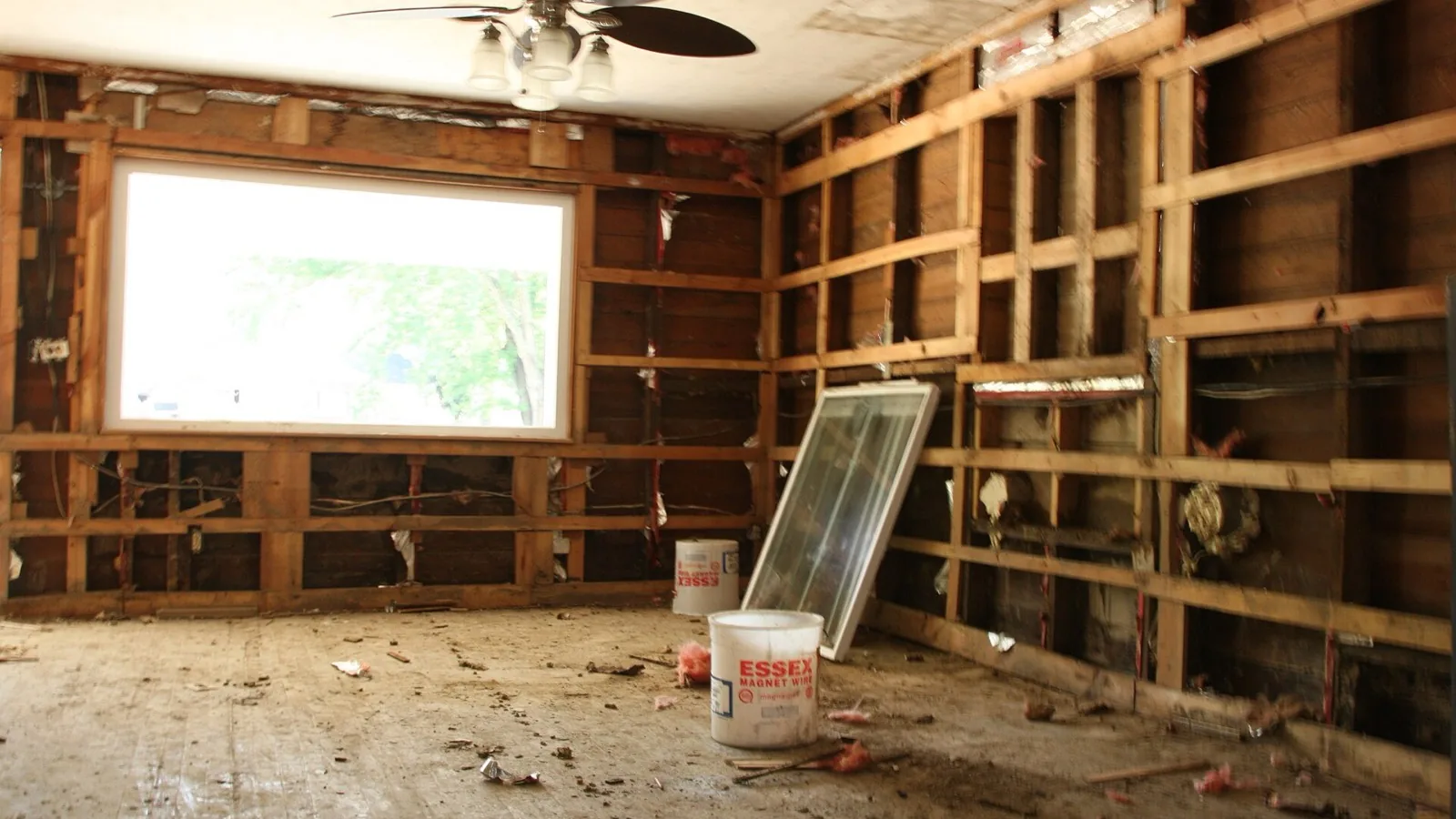
Photo: FEMA / Rob Melendez — public domain
In short
A public adjuster's guide to water mitigation documentation: IICRC S500 category and class, daily drying logs, and the Xactimate WTR lines carriers cut.
Second-floor bathroom, a braided supply line to the toilet lets go overnight, and by morning water has run down two walls and across 380 square feet of finished floor below. The restoration crew extracts, sets six air movers and two LGR dehumidifiers, and pulls them on day six when the framing finally reads dry. The mitigation invoice comes to $4,180. The carrier's desk adjuster pays $2,540 and writes "equipment exceeds IICRC guidelines" in the file notes. Nothing about the loss was unusual. The gap was the paperwork.
Water mitigation is the part of a property claim where money disappears quietly. The scope is small enough that nobody fights it the way they fight a roof, and technical enough that a generalist desk adjuster reaches for the one lever they understand — equipment days — and starts trimming. The public adjuster who can put a category-and-class call, a drying log, and an equipment rationale in front of that adjuster gets paid for the work that was actually done. The one who can't eats the difference.
The volume makes it worth getting right. From 2019 to 2023, water damage and freezing claims made up roughly a quarter of all homeowners insurance claims and averaged about $15,400 each, per the Insurance Information Institute. The mitigation invoice is the first dollar figure on most of those files, and it sets the tone for everything after it. Get the documentation right at the dry-out and the supplement, the contents claim, and the rebuild estimate all inherit a file the carrier already trusts.
Category and class decide the scope before a fan goes down
The IICRC S500 — the ANSI-approved standard for professional water damage restoration, currently in its 2021 fifth edition — frames every dry-out around two separate judgments, and carriers lean on both when they reduce an invoice. The first is category, the contamination level of the water. Category 1 is clean water from a potable source, like the supply line above. Category 2 carries significant contamination — a washing-machine discharge, a dishwasher overflow. Category 3 is grossly contaminated: sewage backups, rising surface water, anything that has sat long enough to grow what it grows. Category drives protective equipment, what materials can be dried in place versus removed, and the disposal line items. A category call the file doesn't support is a category call the carrier will challenge.
The second judgment is class, and class is the one that justifies the equipment count. The S500 grades the evaporation load on a one-to-four scale. Class 1 is a small intrusion where wet porous materials — carpet, gypsum, fiber insulation — cover less than about 5 percent of the combined floor, wall, and ceiling area. Class 2 runs from roughly 5 to 40 percent. Class 3 is more than 40 percent, usually water that came from overhead and soaked walls and ceilings on the way down. Class 4 is bound water held in low-evaporation materials like plaster, hardwood, and concrete — the kind that needs specialty drying and longer timelines. The bathroom loss above is a Class 3: water from above, most of a room's surfaces wet. That class is what puts six air movers and two dehumidifiers on the job, and it is exactly the number an adjuster strikes when the file never states the class or shows the wet square footage that supports it.
The drying log is the evidence, not the paperwork
Equipment placement is a hypothesis. The drying log is the proof that the hypothesis was right and that the crew kept checking it. The S500 drying goal is specific: bring affected materials to within 2 to 4 percentage points of the moisture content of comparable unaffected materials in the same building, measured with a pin or non-invasive meter. You cannot show you reached that goal — or that you were still short of it on day five, which is what earns day six — without a reading taken every day the equipment was running.
A defensible daily entry is not a signature on a sheet. It records the conditions that explain why the equipment stayed: the temperature and relative humidity in the affected area, the grains per pound of moisture in the air, the same numbers from an unaffected area and from outside for comparison, and the moisture content of each material being tracked — read at the same monitoring points and at roughly the same time of day so the trend means something. When those readings flatten before the goal is met, that is the data that supports an extra drying day or a change in equipment. When they are missing, the carrier reads the gap as proof the job was done sooner than billed.
| Reading | What it documents |
|---|---|
| Affected-area temp + RH | The conditions the equipment was working against that day |
| Grains per pound (GPP) | Actual airborne moisture, not just the percentage RH |
| Unaffected + exterior reference | The baseline that defines the S500 drying goal |
| Material moisture content | Progress toward within 2–4 points of the dry standard |
| Equipment on site + run status | That billed equipment-days match equipment that ran |
Where the carrier actually cuts
Three lines on a mitigation invoice absorb most of the reductions, and each maps to a specific gap in the file. The first is equipment count. In Xactimate the dry-out lives under the WTR category — WTR-DRY for air movers per 24-hour period, WTR-DHM for refrigerant dehumidifiers, WTR-DHMD for desiccants — and the S500 Appendix B gives formulas that size the dehumidification to the class and cubic footage of the space. An adjuster who thinks the count looks high reaches for those formulas. The answer is not to argue back; it is to show the class, the affected dimensions, and the calculation that produced the number you placed.
The second is dehumidifier capacity. Xactimate prices dehumidifiers by their AHAM rating — the pints of water per day a unit removes at a standard 80°F, 60 percent relative humidity test condition — so the make and model on the invoice has to match the rate being charged. A high-capacity LGR billed at a low-capacity tier, or the reverse, is an easy line for the carrier to correct and a fast way to lose credibility on the rest of the sheet.
The third is days billed versus days run. WTR equipment line items carry no labor — the travel, setup, daily monitoring, and teardown ride on separate EQ hours — and the cleanest way to invite a fight is to bill an air mover for five days when the log shows three. The discipline cuts the other way too: when the log shows six days of readings still short of the drying goal, six days is defensible, and the reduction to three is the position that does not survive a rebuttal.
The rule that prevents most disputes: Bill the equipment-days the log shows the equipment running — no more, and no fewer. An invoice that matches its own drying log is the one a desk adjuster stops cutting.
Build the file so the pushback bounces
None of this is new to a public adjuster who has worked a water file. What changes the outcome is whether the category call, the class rationale, the daily psychrometric readings, the equipment list, and the photos live in one place that ties back to the loss — or whether they are scattered across a moisture-meter app, a folder of phone photos, the restoration vendor's portal, and a spreadsheet. When the desk adjuster pushes on the equipment count, the rebuttal should take minutes: pull the class determination, the affected dimensions, the Appendix B sizing, and the day-by-day log, all addressed to the same claim.
That is the workflow claimOS for public adjusters is built around — every reading, photo, and document writing back to a single claim record so the mitigation rationale is assembled before the carrier asks for it. Pairing the drying log with a tight insurance claim documentation checklist at intake means the category and class are recorded the day the crew arrives, not reconstructed three weeks later when the reduction letter lands. The invoice that ships with its own evidence is the one that gets paid in full.
What drying standard do carriers expect a mitigation invoice to meet?
Most carriers evaluate water mitigation against the ANSI/IICRC S500 standard for professional water damage restoration. Its drying goal is to return affected materials to within 2 to 4 percentage points of the moisture content of comparable unaffected materials in the same building, documented with daily meter readings.
Why does water class matter more than category for equipment billing?
Category describes contamination and drives protective equipment and disposal decisions; class describes evaporation load and drives how many air movers and dehumidifiers the job needs. The S500 Appendix B sizes dehumidification to the class and volume of the space, so the class determination is what justifies the equipment count on the invoice.
How many days of equipment can I bill?
Bill the days your drying log shows the equipment running toward the drying goal. WTR equipment line items in Xactimate carry no labor and are priced per 24-hour period, so a clean log showing readings still short of dry on a given day is what supports billing that day.
Why do carriers reduce dehumidifier charges specifically?
Xactimate prices dehumidifiers by their AHAM pints-per-day rating, tested at 80°F and 60 percent relative humidity. If the unit's make and model on the invoice does not match the capacity tier being billed, the carrier corrects the rate. Matching each unit to its rated tier removes the easiest reduction.
What single document prevents most mitigation disputes?
The daily drying log. It records temperature, relative humidity, grains per pound, and material moisture content at fixed monitoring points each day, which proves both that the equipment was needed and that the days billed match the days the equipment ran.
Sources cited
- ANSI/IICRC S500 Standard for Professional Water Damage Restoration— IICRC
- Facts + Statistics: Homeowners and renters insurance— Insurance Information Institute
- Using the water mitigation log— Xactware
- The IICRC S500 Approach to Determining Initial Equipment Usage— Restoration & Remediation Magazine
- Dehumidification Capacity in Structural Drying— Cleaning & Restoration Magazine
The documentation lives where the claim does.
Photos, drying logs, scopes, and carrier correspondence land on the claim record as they happen, so the package you send the carrier is the file you actually worked.