
Part 1 of 4The 50-State Property Claim Guide
State legal — Florida
Florida Property Insurance Claim Deadlines and Bad-Faith Protections: 2026 Field Guide
The statutory clock on every Florida property loss, and the bad-faith landscape after SB 2-A and HB 837.
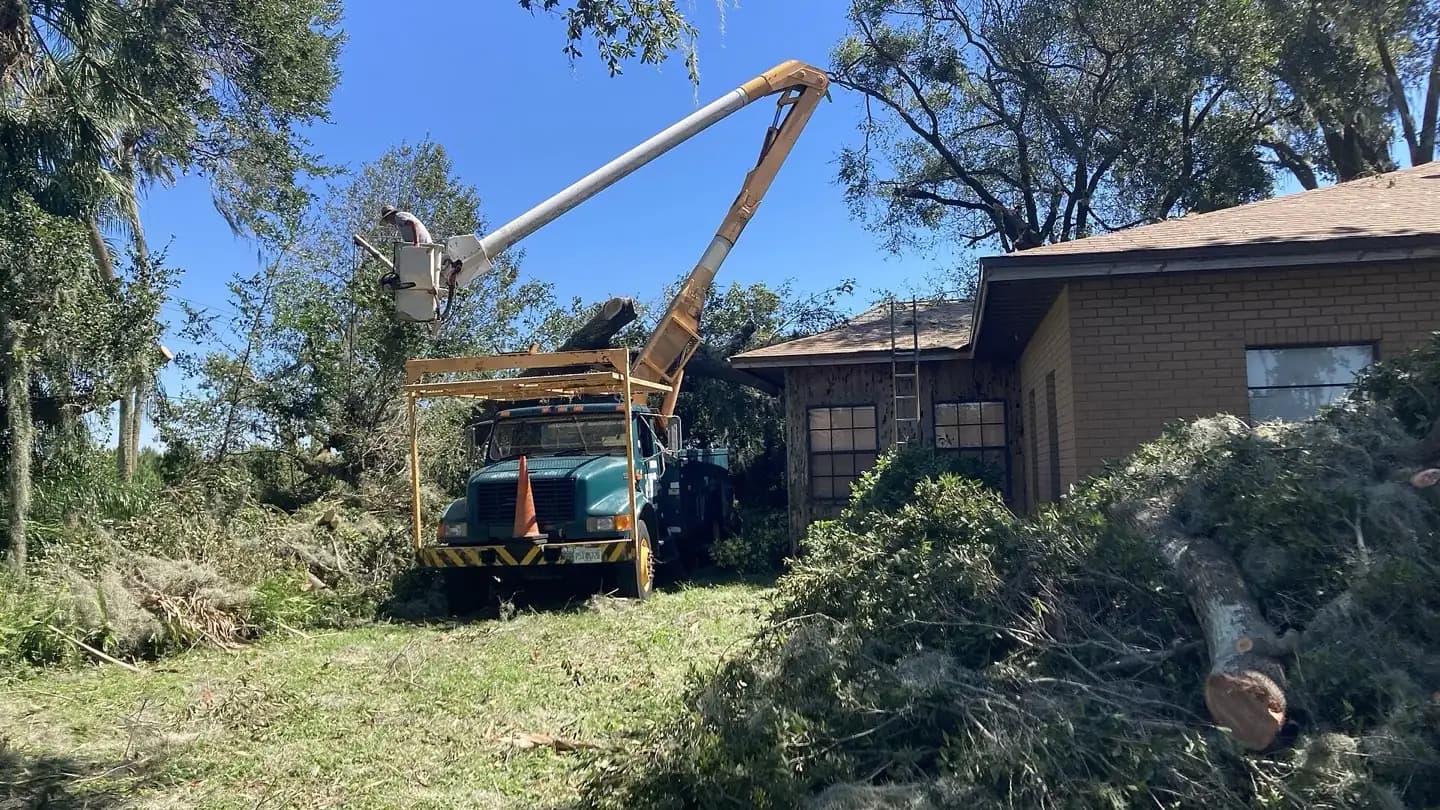
Photo: State Farm / Wikimedia Commons — CC BY 2.0
In short
Florida's 2026 deadlines for property insurance claims: § 627.70132 one-year notice, § 627.70131 carrier clocks, § 627.70152 pre-suit notice, and HB 837 bad-faith rules.
Run the Florida clocks on your file.
Enter the dates you know. Clocks without a date show what starts them.
- —Fla. Stat. § 627.70132
Notice of new or reopened claim (bar)Hard deadline
One year from the date of loss. For wind events the date of loss is the landfall date, or the date NOAA verifies the weather event for non-named storms.
The penalty for missing the window is total: the claim is barred. The one-year window applies to policies issued or renewed after December 16, 2022 (SB 2-A); older policies carried two years.
- —Fla. Stat. § 627.70132
Supplemental claim notice (bar)Hard deadline
18 months from the date of loss for extra damage discovered after the original file was adjusted.
Same statute, same class of bar as the one-year notice window.
- —Fla. Stat. § 627.70131
Acknowledge the claim communicationCarrier clock
7 calendar days from the carrier's receipt of a claim communication.
Documented in § 627.70131; systemic failure is Office of Insurance Regulation exposure.
- —Fla. Stat. § 627.70131
Begin the investigationCarrier clock
7 days from the carrier's receipt of the written proof of loss.
Without a documented proof of loss, the carrier's statutory clock arguably has not started. Investigation delay is a documented bad-faith data point.
- —Fla. Stat. § 627.70131
Physically inspect the propertyCarrier clock
30 days from the carrier's receipt of the written proof of loss.
Inspection delay is a documented bad-faith data point.
- —Fla. Stat. § 627.70131
Pay or deny in writingCarrier clock
60 days from the carrier's receipt of notice of the claim.
From day 61, statutory interest accrues on any unpaid covered amount.
- —Fla. Stat. § 627.70131
Issue settlement paymentCarrier clock
20 days from a reached settlement or a signed release.
A late settlement check is a separate violation.
- —Fla. Stat. § 627.70152
Pre-suit notice of intentHard deadline
Served on the Department of Financial Services at least 10 business days before filing suit, and only after the carrier has issued a coverage determination.
The carrier then has 10 business days to respond with an offer, an appraisal demand, or a reinspection right (reinspection runs another 14 business days). The itemized damages, fees, and costs must match the demand figures.
- —HB 837
Carrier bad-faith safe harborContext
90 days from the carrier's receipt of evidence sufficient to support the claim amount.
If the carrier tenders the lesser of policy limits or the demand amount inside the window, no statutory or common-law bad-faith claim can be brought on that conduct.
- —Per the field guide's HB 837 discussion
Bad-faith statute of limitationsContext
Five years, and the clock does not start until the underlying coverage claim is resolved.
HB 837's two-year general-negligence limitations period does not apply to first-party bad faith.
Computed from the claimOS field guide for this state. Clocks the guide states as plain days are counted as calendar days; business days are counted as weekdays. Informational, not legal advice. Verify against the current statute and policy language.
Same Florida zip code, same carrier, same date of loss. Hurricane Idalia tore through both roofs on August 30, 2023. One file closed for $87,400 in 71 days. The other got a denial letter on day 374 — eight days after the notice deadline had run — and the policyholder has no recourse, because the claim was filed too late. The difference between the two files was not damage, coverage, or carrier. It was a calendar.
The one-year clock most homeowners do not know exists
Before December 2022, a Florida homeowner had two years from the date of loss to give notice of a property insurance claim. SB 2-A cut that to one year. Codified at Fla. Stat. § 627.70132, the rule reads: notice of a new or reopened claim must be given to the insurer within one year of the date of loss. Supplemental claims — extra damage discovered after the original file was adjusted — get 18 months.
For wind events, the date of loss is the landfall date, or, for non-named storms, the date NOAA verifies the weather event. For a hurricane that crosses the state on a Wednesday afternoon, every adjuster's calendar should read "+1 year, last call" on the matching Wednesday next year.
The penalty for missing the window is total. The claim is barred. Carriers have used the new rule to close out late-noticed Ian and Idalia files that, on the damage facts alone, would have paid.
What this changes for the public adjuster's intake conversation: when a homeowner calls in month nine after a storm, the first three questions are date of loss, has the carrier been noticed, and where is the proof. Anything else — scope walk, contractor estimate, mitigation receipts — is downstream of the deadline.
What 7, 30, and 60 actually mean under § 627.70131
The carrier's clock starts the moment the insurer receives a communication about a claim. § 627.70131 sets four separate deadlines, and confusing them is the most common file-management mistake on incoming engagements:
| Trigger | Deadline | If missed |
|---|---|---|
| Insurer receives claim communication | 7 calendar days to acknowledge receipt | Documented in § 627.70131; OIR exposure on systemic failure |
| Insurer receives written proof of loss | 7 days to begin investigation, 30 days to physically inspect | Inspection delay is a documented bad-faith data point |
| Insurer receives notice of claim | 60 days to pay or deny in writing | Statutory interest begins accruing on the unpaid covered amount |
| Settlement reached or signed release received | 20 days to issue payment | Late settlement check is a separate violation |
The 60-day pay-or-deny line is the one that does the work. Day 61, statutory interest at the prevailing rate begins running against the carrier on the unpaid covered amount. That interest is not a courtesy. It compounds, and it shows up in the demand letter line items.
A file with a clean proof of loss on day 1, a denial issued on day 78, and a documented inspection on day 41 has a different settlement posture than the same coverage facts on a file where the carrier inspected on day 9. The dates matter as much as the photos.
§ 627.70152 pre-suit notice — the lever, wound correctly
Florida added a mandatory pre-suit notice in 2021 and tightened the language in 2022. Before any property-insurance suit can be filed, the claimant must serve the Department of Financial Services with a written notice of intent. The notice must itemize damages, attorney fees, and costs, and it cannot be served until the carrier has issued a coverage determination.
The insurer then has 10 business days to respond with a settlement offer, demand appraisal, or assert a right to reinspect. If the carrier picks reinspection, the clock runs another 14 business days.
For the public adjuster, three operational points:
The pre-suit notice belongs to counsel, not the adjuster — but the file the lawyer hands the notice from is built by the adjuster. The itemized damages line in the notice is the same number the adjuster's Xactimate estimate produced, the same number that appeared in the demand, the same number that goes into the lawsuit if the carrier sits on the 10-day window. Inconsistency between those three numbers is the easiest way to lose leverage.
Coverage determination is the gating event. A file in active investigation cannot be noticed under § 627.70152. Knowing when the carrier has actually made a determination — and when they are stalling to delay that determination — is a substantive part of file management, not a procedural footnote.
The 10/14-business-day windows on the carrier side are short. The carrier's incentive to respond quickly is the appraisal lever; the claimant's incentive to wait out the response is the case-fee posture, which is no longer one-way.
After SB 2-A and HB 837 — bad faith without the fee-shift cushion
For more than two decades, Fla. Stat. § 627.428 gave a prevailing insured one-way attorney-fee recovery in any property-insurance suit. SB 2-A repealed it for policies issued after December 16, 2022. Cases are now governed by the general proposal-for-settlement rules under § 768.79, which create two-way fee exposure based on settlement posture rather than outcome.
The downstream effect on adjuster file work: § 768.79 settlement offers now carry a 25% fee-shift threshold in both directions. A carrier offer of $42,000 that the claimant rejects, followed by a $33,000 verdict, exposes the claimant to the carrier's fees from the offer date forward. The math on whether to push past a documented offer is a different math than it was in 2021.
HB 837, signed in March 2023, layered a bad-faith overhaul on top. Three points worth keeping in the file template:
The 90-day safe harbor. If the carrier tenders the lesser of policy limits or the demand amount within 90 days of receiving sufficient evidence of the claim, no bad-faith claim attaches. The corollary: the date on which the demand was sent, and what evidence accompanied it, is now a substantive fact.
Negligence alone is not bad faith. The standard requires more than mere negligence by the insurer — HB 837 codified what the case law had long held.
Claimant conduct is on the record. Courts may now consider the conduct of claimants, insureds, and their attorneys when evaluating bad faith. The communications log on the adjuster's side — every email, every PA-to-desk-adjuster call note — is discoverable evidence about whether the claimant acted in good faith.
Bad-faith claims still carry a five-year statute of limitations, but the clock does not start until the underlying coverage claim is resolved. The two-year general-negligence SOL under HB 837 does not apply to first-party bad faith.
Fee caps on the PA contract. Hurricane files signed during or within one year of a gubernatorial declaration are capped at 10% under Fla. Stat. § 626.854(11)(b). Non-emergency files, and any reopened or supplemental claim, are capped at 20%. The cap goes on the contract, not on a side letter.
A working file calendar
For every Florida residential property loss the adjuster takes in:
Day 0 is the date of loss, not the date of engagement. The one-year notice deadline runs from day 0 regardless of when the homeowner called. Mark +365 days on the calendar in the first hour.
The proof of loss is the trigger for the 7/30/60 cascade. Send it early, send it written, and confirm receipt. Without a documented proof of loss, the carrier's statutory clock arguably has not started.
The 60-day pay-or-deny line is the file's first negotiation milestone. Day 61, the demand letter writes itself.
The pre-suit notice route requires a coverage determination on file. If the carrier is in indefinite "active investigation," that is a procedural problem to solve before it is a litigation strategy.
Florida is not a state where deadlines are negotiable. The carriers will not extend them. The Department of Financial Services will not waive them. And after SB 2-A, the legislature has shown a willingness to compress them further on the next reform cycle.
The public adjuster who treats the deadline calendar as the spine of the file — and the damage scope as the muscle — closes more files cleanly. claimOS for public adjusters was built around that posture: every file shows its statutory deadlines, every communication is timestamped on the audit trail, every demand traces back to the proof of loss that started the clock. If you are evaluating tooling for your firm, the public adjuster software comparison walks the same questions on every product on the market.
Florida property insurance deadlines — FAQ
What is the deadline to file a property insurance claim in Florida?
Under Fla. Stat. § 627.70132, an insured has one year from the date of loss to give notice of a new or reopened claim. SB 2-A shortened this from two years effective for policies issued or renewed after December 16, 2022. Supplemental claims have 18 months from the date of loss.
How long does a Florida insurer have to pay or deny a claim?
Fla. Stat. § 627.70131 gives the carrier 60 days from receipt of notice of claim to pay or deny in writing. After day 60, statutory interest begins to accrue on any unpaid covered amount.
What is the pre-suit notice requirement under § 627.70152?
Before filing a property-insurance lawsuit, the claimant must serve the Department of Financial Services with a written notice of intent at least 10 business days before suit. The notice must itemize damages, attorney fees, and costs, and the carrier has 10 business days to respond with a settlement offer or 14 business days to reinspect.
Did SB 2-A eliminate one-way attorney fees in Florida property insurance cases?
Yes. SB 2-A repealed Fla. Stat. § 627.428's one-way fee statute for property insurance suits on policies issued after December 16, 2022. Cases now run under § 768.79 proposal-for-settlement rules, which create two-way fee exposure based on settlement posture.
What does HB 837's 90-day safe harbor do to a bad-faith claim?
If the carrier tenders the lesser of policy limits or the demand amount within 90 days of receiving sufficient evidence of the claim, no statutory or common-law bad-faith claim can be brought based on that conduct. The 90 days run from the date the carrier receives evidence sufficient to support the claim amount.
What is the public adjuster fee cap in Florida after a hurricane?
Fla. Stat. § 626.854(11)(b) caps public adjuster fees at 10% of insurance claim payments for claims based on events covered by a gubernatorial declaration of state of emergency, applicable for one year after the declaration. For non-emergency claims the cap is 20%. Reopened or supplemental claims are capped at 20%.
Sources cited
- Fla. Stat. § 627.70131 — Insurer's duty to acknowledge communications regarding claims— The Florida Senate
- Fla. Stat. § 627.70132 — Notice of property insurance claim— Florida Legislature
- Fla. Stat. § 627.70152 — Suits arising under a property insurance policy— The Florida Senate
- Florida Enacts Major Tort Reform and Bad-Faith Insurance Claim Legislation (HB 837)— Holland & Knight
- Historic Florida Insurance Reforms Under SB 2-A— Clyde & Co
- Fla. Stat. § 626.854 — Public adjuster definitions, prohibitions, and fee caps— The Florida Senate
Statutory clocks, tracked on every file.
claimOS calendars these deadlines automatically on each claim: acknowledgement, decision, payment, and the suit limitation, each with its code section attached and visible to the whole team.