
Part 3 of 4The 50-State Property Claim Guide
State legal — New York
New York Property Insurance Claim Deadlines: A Public Adjuster's 2026 Field Guide
The 24-month suit limitation, Regulation 64's carrier clocks, the consequential-damages window from Bi-Economy and Panasia, and what the pending FISPA bill would change.
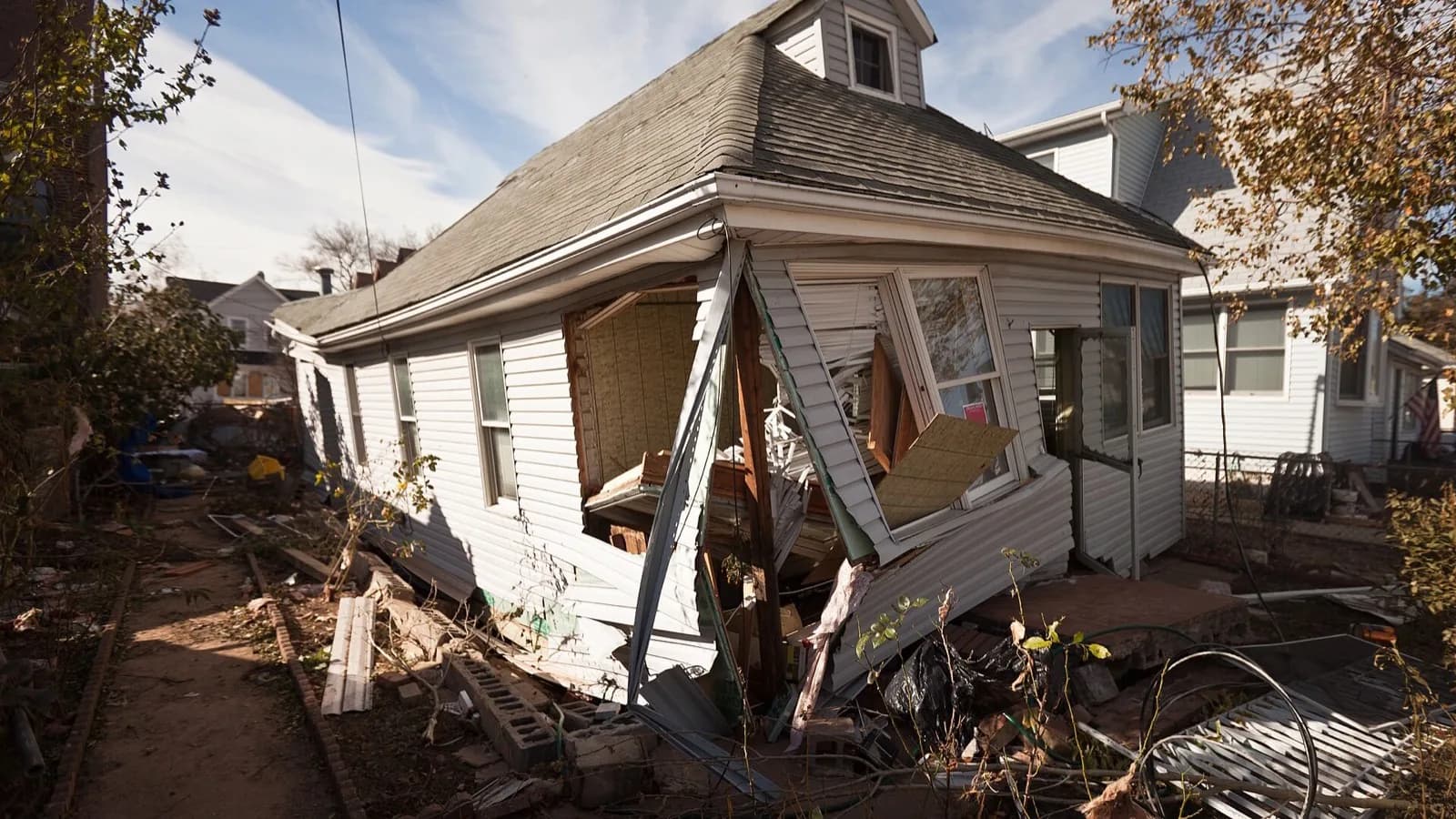
Photo: DVIDSHUB / Wikimedia Commons — CC BY 2.0
In short
New York's 24-month suit limit, Regulation 64 carrier clocks, and the Bi-Economy bad-faith window — a public adjuster's 2026 map of the deadlines that close claims.
Run the New York clocks on your file.
Enter the dates you know. Clocks without a date show what starts them.
- —Standard fire policy, Ins. Law § 3404
Suit limitation: 24 months from the date of lossHard deadline
24 months from the inception of the loss. Not from denial; not from a failed appraisal.
Nothing the carrier does tolls it: partial payment, reinspection, silence, appraisal demands, or a DFS complaint. Only a signed tolling agreement or a filed suit stops the clock. Past it, the claim is simply gone.
- —Standard fire policy, Ins. Law § 3404
Signed and sworn proof of loss due (insured)Hard deadline
Within 60 days after the loss, unless the carrier extends the time in writing.
Real and enforceable: a carrier can demand a formal sworn proof and hold the file to the sixty-day clause. Treat it as a hard deadline and get any extension in writing.
- —Standard fire policy, Ins. Law § 3404
Immediate written notice of the loss (insured)Hard deadline
Immediate written notice; immediacy is judged against what was reasonable.
No fixed day count exists. Log the date the loss was discovered, not the date of first contact.
- —Regulation 64, 11 NYCRR 216
Acknowledge the claim (regulatory clock)Regulatory clock
15 business days after notice of the claim.
No private right of action attaches to Regulation 64 or § 2601: a violation is a matter for the Department of Financial Services, not a check the policyholder can cash. Each missed mark is a dated, documented failure for the DFS complaint and the consequential-damages record.
- —Regulation 64, 11 NYCRR 216
Begin investigation and specify every required item and form (regulatory clock)Regulatory clock
15 business days, stated in the same sentence as the acknowledgement clock.
Same soft-teeth caveat: DFS enforcement only. Documentation of the miss is the leverage.
- —Regulation 64, 11 NYCRR 216
Accept or reject in writing (regulatory clock)Regulatory clock
15 business days after the carrier receives a properly executed proof of loss and everything it asked for. When the carrier suspects arson, the window stretches to 30 business days under Ins. Law § 2601.
Unlike Texas, a blown New York decision deadline starts no interest meter. It is DFS-complaint fuel and record for Bi-Economy consequential damages, nothing more.
- —Standard fire policy, Ins. Law § 3404
Payment due (dual-trigger policy clock)Carrier clock
60 days after BOTH conditions: the carrier receives the proof of loss AND the loss is ascertained by written agreement or a filed appraisal award.
An unanswered number never ripens into a pay date; ascertainment takes a written agreement or an appraisal award. Worth quoting in writing when a carrier lets an accepted number drift.
- —Senate Bill S166
FISPA (Senate Bill S166) is not lawContext
Proposed six-month determination window and thirty-day pre-suit demand. As of mid-2026, recommitted to committee without a floor vote.
Build the calendar on the twenty-four-month suit limitation that exists today, not the six-month determination window that might exist someday.
Computed from the claimOS field guide for this state. Clocks the guide states as plain days are counted as calendar days; business days are counted as weekdays. Informational, not legal advice. Verify against the current statute and policy language.
Massapequa, Nassau County, the second week of January. A braided supply line behind a second-floor vanity let go during the freeze and ran for eleven hours before anyone got home to hear it. Two houses on the same block filed the same week — same carrier, same burst-pipe cause of loss, near-identical scope around $71,000. One file settled in February. The other was still under review when the twenty-fourth month closed, and the homeowner found out on a Tuesday that the window to sue had already run. The difference was never the water. It was who was counting the days.
New York does not make that clock easy to see. The deadline that ends a property claim here is not printed in a prompt-payment statute with an interest penalty bolted on; it sits in the policy's own fire-contract boilerplate, and it runs from a date most homeowners have stopped thinking about by the time it matters. A public adjuster who runs New York files carries the calendar the client cannot, because the calendar is where these claims are won or quietly lost.
The clock that actually closes New York files
The number to memorize is twenty-four months, and the trigger is the date of loss. New York's standard fire policy — the language every admitted property policy in the state has to mirror under Insurance Law § 3404 — says no action on the policy is sustainable unless it is commenced within twenty-four months next after the inception of the loss. Not twenty-four months after denial. Not after appraisal fails. After the loss.
That clause overrides what most people assume they are holding. New York's general limitations period for breach of a written contract is six years under CPLR 213, and clients hear six years and relax. The policy's own suit-limitation clause cuts it to two, and New York courts enforce the shorter contractual period as written. The freeze that split the supply line in January 2026 starts a clock that ends in January 2028, and nothing the carrier does in the meantime — a partial payment, a reinspection, a stretch of silence, an appraisal demand — stops it. Only a signed tolling agreement or a filed suit does.
This is the single most expensive thing to get wrong on a New York file, because getting it wrong stays invisible until it is fatal. A Texas file that blows a deadline still has a prompt-payment interest claim to fall back on. A New York file that runs past twenty-four months has nothing left. The claim is simply gone.
What the policy asks of the insured first
Before that outer clock, the standard fire policy sets two shorter ones that bind the insured rather than the carrier. The policy requires immediate written notice of the loss, and it requires a signed and sworn proof of loss within sixty days after the loss unless the carrier extends the time in writing. The sixty-day proof-of-loss requirement is real and enforceable; a carrier that wants to be difficult can demand a formal sworn proof and hold the file to it. The countermove is to treat the proof of loss as a deliverable with its own deadline from day one, not as something to assemble after the carrier finally asks.
The policy's payment language runs the other direction once the proof is in. The amount of loss becomes payable sixty days after the carrier receives the proof of loss and the loss is ascertained — by written agreement between the parties or by a filed appraisal award. That sixty-day payment window is the closest thing New York's fire contract gives the insured to a pay-by date, and it is worth quoting in writing when a carrier lets an accepted number drift.
| What it binds | Deadline | Source | The trap |
|---|---|---|---|
| Insured — notice | Immediate written notice of the loss | Standard fire policy, Ins. Law § 3404 | Immediacy is judged against what was reasonable. Log the date the loss was discovered, not the date of first contact. |
| Insured — proof of loss | 60 days after the loss, unless extended in writing | Standard fire policy, Ins. Law § 3404 | A carrier can demand a formal sworn proof and enforce the 60-day clause. Get the extension in writing or file on time. |
| Carrier — payment | 60 days after proof of loss received and loss ascertained | Standard fire policy, Ins. Law § 3404 | Ascertainment takes a written agreement or an appraisal award. An unanswered number never ripens into a pay date. |
| Suit limitation | 24 months after inception of the loss | Standard fire policy, Ins. Law § 3404 | Overrides the 6-year CPLR 213 period. Runs from the date of loss, and carrier delay does not toll it. |
The carrier's clock has soft teeth
New York does regulate how fast a carrier has to move, but enforcement lives with the regulator, not the policyholder. Regulation 64 — 11 NYCRR 216 — sets the claim-handling calendar. The carrier has fifteen business days to acknowledge a claim after notice, fifteen business days to begin its investigation and to tell the insured every item, statement, and form it expects, and fifteen business days after it receives a properly executed proof of loss and everything it asked for to state in writing whether the claim is accepted or rejected. When the carrier suspects arson, that last window stretches to thirty business days under Insurance Law § 2601.
The gap between New York and a prompt-payment state opens up in what happens when the carrier misses those marks. In Texas, a blown decision deadline starts an eighteen-percent statutory interest meter. In New York, a Regulation 64 violation is a matter for the Department of Financial Services, not a check the policyholder can cash. No private right of action attaches to § 2601 or to Regulation 64. What the regulation hands a public adjuster is a paper standard: every missed fifteen-business-day mark is a dated, documented failure that builds the DFS complaint and, more usefully, the record for the one theory in New York that does reach the carrier's wallet.
The bad-faith window that isn't a tort
New York does not recognize a standalone tort of insurance bad faith for first-party property claims. A public adjuster who promises a client a bad-faith lawsuit the way a Florida or Texas operator might is promising something the state does not offer. What New York offers instead is narrower and, on a well-built file, sharper: consequential damages above the policy limit for breach of the implied covenant of good faith and fair dealing.
The two cases that opened that door were decided the same day in February 2008. In Bi-Economy Market, Inc. v. Harleysville Insurance Co. of New York (10 N.Y.3d 187), the Court of Appeals let a family meat market pursue the demise of its entire business as consequential damages after the carrier dragged out a fire claim and underpaid the business-interruption coverage. In Panasia Estates, Inc. v. Hudson Insurance Co. (10 N.Y.3d 200), the same court carried the reasoning into a first-party property claim. The rule that came out of the pair: when a carrier breaches its duty to investigate and pay in good faith, and the resulting harm was foreseeable and within the contemplation of the parties when the policy was written, the insured can recover damages beyond the face of the policy.
That theory lives or dies on documentation built while the clock runs. Consequential damages have to be foreseeable and provable — the mortgage that fell into default because the dwelling payment never came, the mold remediation that tripled because the water sat for months, the tenant who left because the building stayed unrepaired. None of it is recoverable as an afterthought. It is recoverable because someone logged the delay, tied each carrier failure to a date, and connected the specific harm to the specific breach. Running a file that way is the entire case for claims software built for public adjusters instead of a repurposed CRM: the record is the leverage, and New York hands the policyholder no other.
What FISPA would change, and why you don't build on it yet
There is a bill that would push New York closer to a prompt-payment state. Senate Bill S166, the Fair Insurance Settlement Practice Act, would rewrite Insurance Law § 2601 to give policyholders a private right of action against an insurer that unreasonably refuses or delays payment without substantial justification. It names fourteen unfair claim-settlement practices, requires the carrier to make a final written determination on both liability and value within six months of notice of the loss, requires a thirty-day pre-suit demand, and lets a court award double damages plus costs and attorney fees where the conduct was willful and meant to defraud.
As of the middle of 2026, FISPA is not law. It was introduced in January 2025, amended, and recommitted to the Senate Insurance Committee, where it has sat without a floor vote. It may pass in a later session; it may not. A public adjuster tracking New York deadlines builds the calendar on the twenty-four-month suit limitation that exists today, not the six-month determination window that might exist someday. Comparing the tools that actually track these clocks comes down to which ones assume New York as it is written now. If FISPA changes the rules, the file already documented is the file that benefits first.
The Massapequa file that settled did not settle because the damage was different. It settled because the adjuster filed the sworn proof of loss inside sixty days, logged every missed Regulation 64 date, quoted the sixty-day payment clause when the accepted number drifted, and never let the twenty-four-month suit limitation out of sight. The file next door had the same water and no calendar. In New York, that is the whole difference, and it is decided in the first sixty days of a claim that gets two years to end.
How long do I have to sue my insurer on a New York property claim?
The standard fire policy required by Insurance Law § 3404 bars any suit not commenced within twenty-four months after the inception of the loss. That contractual two-year clause overrides the six-year breach-of-contract period in CPLR 213, and it runs from the date of loss, not from denial. Carrier delay, appraisal, and negotiation do not toll it; only a written tolling agreement or a filed suit does.
Does New York recognize insurance bad faith?
Not as a standalone tort for first-party property claims. New York instead allows consequential damages above the policy limit for breach of the implied covenant of good faith, under Bi-Economy Market v. Harleysville (10 N.Y.3d 187) and Panasia Estates v. Hudson Insurance (10 N.Y.3d 200), both decided in 2008. The damages have to have been foreseeable when the policy was written, which is why contemporaneous documentation of the delay and its consequences matters so much.
When is my proof of loss due in New York?
The standard fire policy requires a signed and sworn proof of loss within sixty days after the loss, unless the carrier extends the time in writing. A carrier can demand a formal proof and enforce the sixty-day clause, so treat it as a hard deadline and get any extension in writing.
How fast does a New York carrier have to respond to a claim?
Under Regulation 64 (11 NYCRR 216), the carrier has fifteen business days to acknowledge the claim, fifteen business days to begin investigating and to list the items it needs, and fifteen business days after receiving the proof of loss and all requested items to accept or reject the claim in writing. Suspected arson extends that last window to thirty business days under Insurance Law § 2601.
What is FISPA (Senate Bill S166)?
The Fair Insurance Settlement Practice Act is a pending New York bill that would create a private right of action against insurers for unreasonable delay or refusal, require a final determination within six months, and allow double damages for willful, fraudulent conduct. As of mid-2026 it has been recommitted to the Senate Insurance Committee and is not law. Build the deadline calendar on the rules that exist now.
Does filing a DFS complaint stop the two-year suit clock?
No. A complaint to the Department of Financial Services about a Regulation 64 violation does not toll the twenty-four-month suit-limitation clause. Only a written tolling agreement with the carrier or a timely filed lawsuit preserves the right to sue.
Sources cited
- NY Insurance Law § 3404 — Fire insurance contracts; standard policy provisions— New York State Senate
- 11 NYCRR Part 216 (Regulation 64) — Unfair Claims Settlement Practices— Legal Information Institute, Cornell Law School
- Bi-Economy Market, Inc. v. Harleysville Insurance Co. of New York, 10 N.Y.3d 187 (2008)— FindLaw / New York Court of Appeals
- NY Insurance Law § 2601 — Unfair claim settlement practices; penalties— New York State Senate
- NY Senate Bill S166 (2025-2026) — Fair Insurance Settlement Practice Act— New York State Senate
Statutory clocks, tracked on every file.
claimOS calendars these deadlines automatically on each claim: acknowledgement, decision, payment, and the suit limitation, each with its code section attached and visible to the whole team.