
Part 2 of 4The 50-State Property Claim Guide
State legal — California
California Bad-Faith Insurance Claims: What the 2025 Rulings Mean for Your Files in 2026
Three appellate decisions from 2025 changed the evidence bar for smoke damage, duty to defend, and the genuine dispute doctrine. The statute of limitations clock is already running on January 2025 wildfire files.
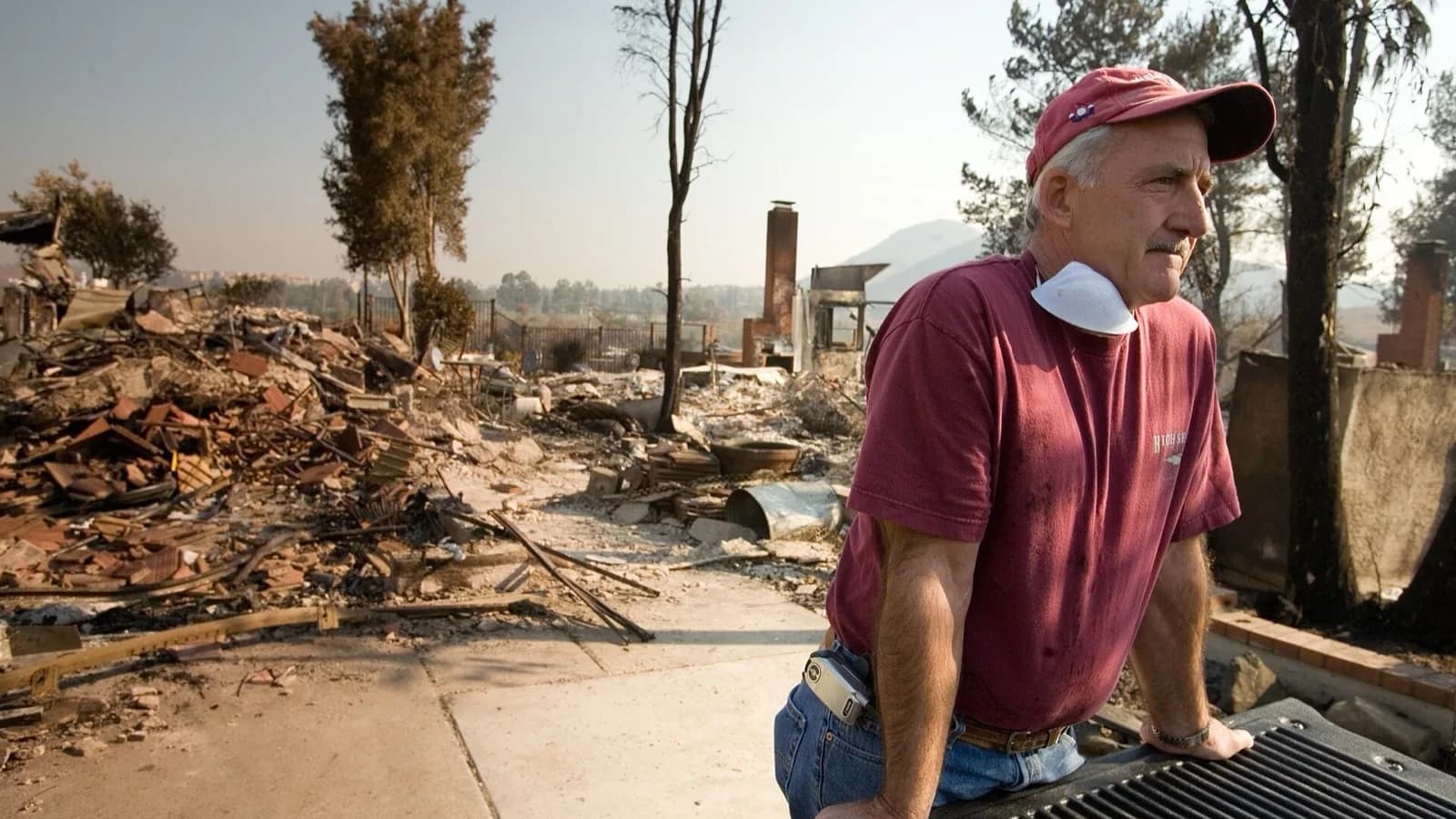
Photo: FEMA / Andrea Booher — public domain
In short
California's bad-faith landscape shifted in 2025. Public adjusters working fire and smoke claims need to know Gharibian, Bartel, and Aliff — and how the 2-year SOL applies to January 2025 wildfire files.
The Palisades fire took one house on a January morning in 2025; the smoke took the one next door. A year later the burned-out lot is closed at $1.2 million and the smoke-damaged home is in coverage litigation — the carrier citing Gharibian v. Wawanesa to argue that soot and ash without physical alteration never triggered “direct physical loss to property.” The difference was not the damage. It was whether a certified industrial hygienist sampled for ash and VOC deposition at the first inspection, or whether the file rested on phone photos and a note that “smoke lingered for several weeks.” That evidence gap was built at intake, not at the courthouse.

California's § 2695 Deadlines: The Clock That Creates Your Bad-Faith Case
California's Fair Claims Settlement Practices Regulations — codified at Title 10, California Code of Regulations § 2695 — set hard deadlines that apply to every licensed insurer in the state. Carriers that miss these windows don't just face regulatory exposure; they build a bad-faith record that runs independent of whether the claim was eventually paid.
| Trigger | Deadline | Note |
|---|---|---|
| Receipt of claim notice | 15 calendar days | Acknowledge, provide forms, begin investigation |
| Receipt of proof of claim | 40 calendar days | Accept or deny in writing; one 30-day extension allowed with written justification |
| Each subsequent 30-day period | 30 calendar days | Written status update required until determination or legal action filed |
| Acceptance + executed release | 30 calendar days | Payment must be tendered |
Missing the 40-day deadline is not automatically bad faith — but it's evidence of it. California courts look at whether the delay was reasonable given the claim's complexity. An adjuster who misses the deadline on a straightforward wind event with a complete proof of loss has a much harder time asserting a "genuine dispute" defense than one who misses it on a total-loss wildfire requiring expert scope work on a damaged foundation. The distinction matters because the Bartel court in 2025 signaled that even factual complexity doesn't shelter a carrier that refuses to investigate all potential coverage bases.
The Statute of Limitations Split: When Your Clock Starts Running
California bad-faith claims run on two separate statutes of limitations depending on how the claim is pleaded.
Tort — breach of implied covenant: two years from the date the insured knew or should have known of the carrier's unreasonable conduct. This typically runs from the date of denial or, on a delay theory, from the date the insured first suffered actual damage from the delay. California Code of Civil Procedure § 335.1 governs.
Contract — breach of contract for benefits: four years under CCP § 337, running from the date of breach.
For public adjusters working January 2025 wildfire files, the two-year tort clock is already running on any claimant who received a denial or unreasonable low-ball offer in early 2025. By January 2027, those claims are time-barred on the tort theory unless the discovery rule extends the accrual date. Document when the denial arrived and when the client understood the denial to be unreasonable — those two facts determine whether the SOL runs from the denial date or from discovery.
Brandt fees are also worth flagging. Under Brandt v. Superior Court (1985) 37 Cal. 3d 813, an insured who retains counsel to recover benefits the insurer wrongfully withheld can recover the portion of attorney fees attributable to that work as compensatory damages — separate from any punitive award. Those fees count toward the base for calculating punitive ratios. California Civil Code § 3294 requires clear and convincing evidence of malice, fraud, or oppression for punitive damages. Courts have generally held that punitive awards above a 9:1 ratio to compensatory damages — including Brandt fees — require extraordinary justification.
Three 2025 Rulings Every California PA Should Know
Gharibian v. Wawanesa General Insurance Company (Cal. Ct. App., 2nd Dist. 2025, No. B325859) held that ash and debris contamination from a wildfire half a mile away — without burn damage at the insured property — did not constitute "direct physical loss to property" under a homeowners policy. The Second District relied on Another Planet Entertainment v. Vigilant Insurance Company (2024) 15 Cal. 5th 1106, the California Supreme Court's COVID-era ruling requiring evidence that property was physically altered in a "lasting and persistent manner."
What this means on your files: photos of smoke residue and a smell are not enough. Your expert needs to document physical alteration — ash embedding, VOC deposition causing material degradation, or structural staining that persists after cleaning. The California Insurance Commissioner issued a bulletin after Gharibian confirming that the ruling doesn't eliminate smoke damage coverage, but the burden of proof now sits explicitly on the insured to show physical change, not just the presence of contaminants. A certified industrial hygienist sampling for PAHs and heavy metals in porous surfaces is your strongest intake tool.
Bartel v. Chicago Title Insurance Company (Cal. Ct. App., 6th Dist. 2025, No. H052083) reversed a trial court finding that Chicago Title did not act in bad faith when it denied a defense to a title policyholder, even though the underlying claim was factually tangled. The Sixth District held that complexity of the underlying dispute does not shield a carrier from bad-faith liability for refusing to defend — the carrier must investigate all plausible coverage theories before denying. The court also rejected the "genuine dispute" doctrine as a defense to duty-to-defend bad faith, holding that doctrine applies to benefit disputes, not defense obligations.
For PA work, Bartel's logic applies beyond title insurance: if a carrier is sitting on a fire claim while citing complexity, each missed § 2695 deadline and each refusal to engage a scope question is a documented piece of the bad-faith record. Start that documentation at intake.
Aliff v. California FAIR Plan Association (Los Angeles Superior Court, No. 21STCV20095) held, after four years of litigation, that the FAIR Plan policy's limitation of smoke coverage to damage "visible to the unaided human eye" violated Insurance Code § 2070, which requires standard fire policy coverage. The court also rejected the FAIR Plan's requirement that all physical loss be "permanent." This ruling carries significant weight in 2026: a large share of Palisades and Eaton fire claimants carry FAIR Plan policies as their primary or excess layer, and Aliff opens those files to smoke damage claims the FAIR Plan had previously denied on visibility grounds.
What the 2026 Legislation Actually Changes
Three bills enacted in early 2026 shifted the California landscape for wildfire insurance claims.
SB 495 (Eliminate "The List" Act) requires insurers to pay 60% of contents coverage limits — capped at $350,000 — to wildfire total-loss claimants without a detailed personal property inventory. For any January 2025 fire total loss, demand that 60% payment before beginning detailed itemization. The floor doesn't replace itemization work; for high-value contents policies, detailed documentation still recovers the amounts above $350,000.
SB 547 (Business Insurance Protection Act) extended the one-year non-renewal moratorium — previously limited to residential policies under the 2018 Wildfire Safety Act — to commercial policies. One year remains a short runway for claimants in active litigation or mid-rebuild.
AB 226 (FAIR Plan Stability Act) authorizes the FAIR Plan to access catastrophe bonds and additional state financial support. The mechanism improves solvency but doesn't mandate faster claim handling or a better evidence standard. FAIR Plan claimants still need expert documentation to put their files in the best position.
SOL Watch — January 2025 Files The two-year tort clock on January and February 2025 wildfire denials expires in early 2027. If your client received a written denial or an unreasonable underpayment offer in those first weeks, the window for a bad-faith tort claim is now less than 18 months. Flag those files, document the denial date, and coordinate with counsel on tolling options.
claimOS is built for the team running the recovery, not the carrier paying it. On California FAIR Plan and standard fire files, tagging evidence by type and date at intake — before the carrier opens its investigation — is the single most consequential workflow step post-Gharibian. See how claimOS compares to other public adjuster software for California fire file management.
What is the statute of limitations for bad faith insurance claims in California?
Two years for a tort claim (breach of the implied covenant of good faith and fair dealing), running from the date the insured knew or should have known of the unreasonable conduct. Four years for a breach of contract claim under CCP § 337. For January 2025 wildfire denials, the two-year tort clock expires in early 2027.
What are Brandt fees in a California bad-faith case?
Under Brandt v. Superior Court (1985) 37 Cal. 3d 813, an insured who hires an attorney to recover benefits the carrier wrongfully withheld can recover the attorney fees attributable to that recovery as compensatory damages — separate from any punitive award. Those fees factor into the base for calculating punitive damage ratios under California Civil Code § 3294.
Does Gharibian v. Wawanesa eliminate smoke damage coverage in California?
No. The California Insurance Commissioner issued a bulletin after the 2025 ruling clarifying that smoke damage coverage is still required under standard fire policies. What Gharibian did was raise the evidentiary bar: claimants must document physical alteration of the property, not just the presence of smoke or ash. Expert sampling for chemical deposition in porous materials is now the practical standard of care.
How does the FAIR Plan 'visible to the unaided human eye' ruling affect 2026 wildfire claims?
The Aliff ruling held that the FAIR Plan's smoke damage limitation to visible damage violated California Insurance Code § 2070. Claimants whose FAIR Plan smoke damage claims were denied on visibility grounds may have viable breach of contract and bad-faith claims, subject to the applicable statute of limitations.
What does SB 495 mean for a public adjuster working a wildfire total loss?
SB 495 requires the insurer to pay 60% of the policyholder's contents coverage limit — up to $350,000 — without requiring a detailed inventory. For January 2025 fire total losses, demand that payment before starting itemization work. Detailed documentation still matters for recovery above the statutory floor on high-value policies.
Sources cited
- California Fair Claims Settlement Practices Regulations — Cal. Code Regs. tit. 10, § 2695— California Department of Insurance
- California Insurance Code § 790.03 — Unfair Claims Settlement Practices— California Legislative Information
- Insurance & Reinsurance 2026: USA — California Trends and Developments— Chambers and Partners / Buchalter LLP
- California Insurance Bad Faith: A Guide to Your Legal Rights— United Policyholders
- California Insurance Claims: Special Rules and Deadlines— Terms.Law
Statutory clocks, tracked on every file.
claimOS calendars these deadlines automatically on each claim: acknowledgement, decision, payment, and the suit limitation, each with its code section attached and visible to the whole team.