
Industry data — catastrophe claims
Cycle Time After CAT Events: How Long Carriers Really Take After a Named Storm
Closure rate is the number everyone quotes. Cycle time is the number that pays the homeowner.
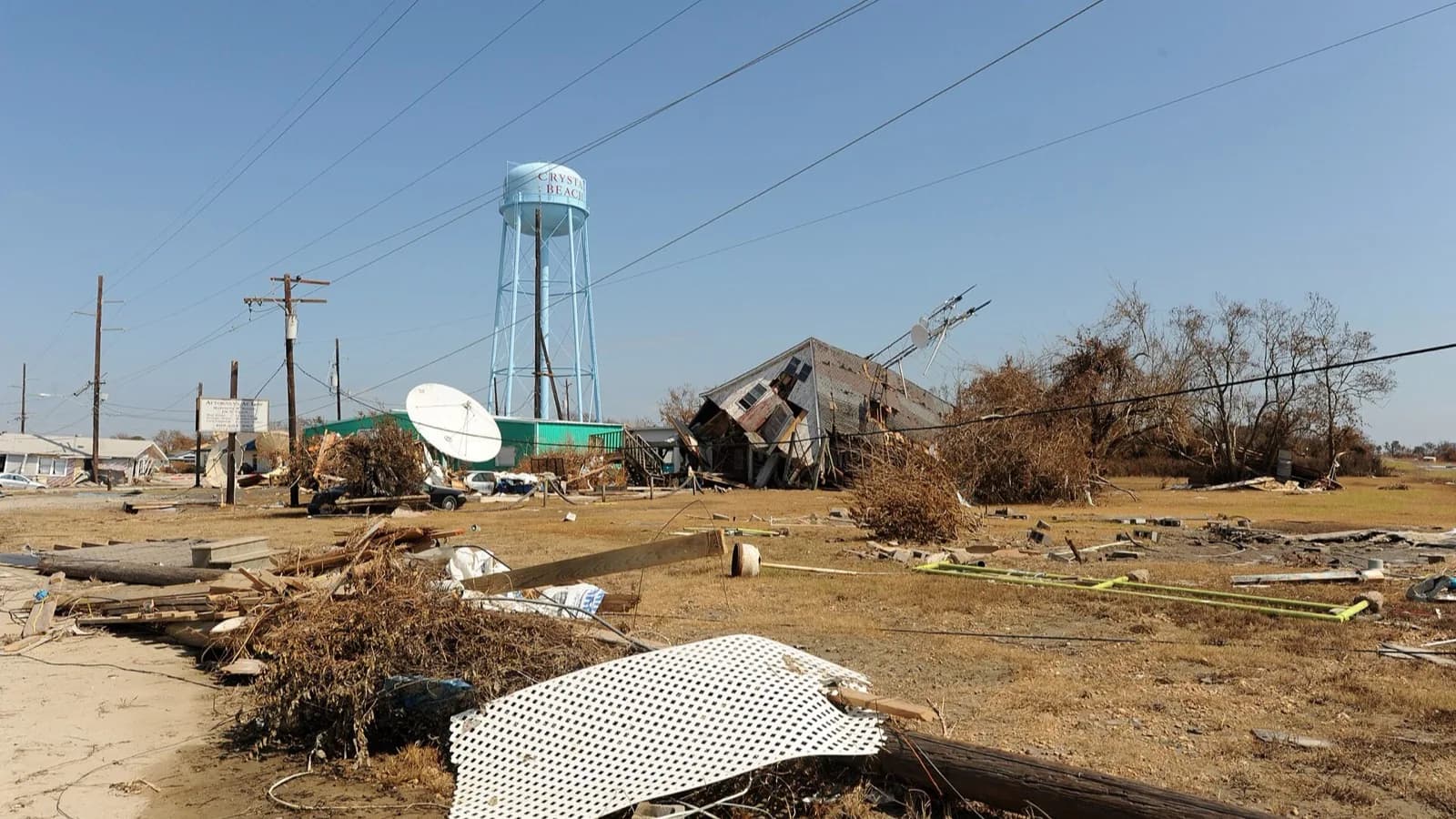
Photo: FEMA / Jocelyn Augustino — public domain
In short
How long carriers take to pay after a named storm, what closure-rate data hides, and the Florida and Texas statutory clocks public adjusters can enforce.
Two homeowners on the same Cape Coral street filed Hurricane Ian claims with the same carrier the same week. One file closed in 38 days for $61,000. The other took fourteen months, three reinspections, and a Department of Financial Services complaint to close for $112,000 — for water and wind damage that started out looking nearly identical. Same storm, same adjuster pool, same policy form. What separated them was cycle time, and almost none of it shows up in the numbers the state publishes.
When a named storm makes landfall, the figure everyone repeats is the closure rate. Florida's Office of Insurance Regulation reported that Hurricane Ian generated 758,644 claims, and by its October 2023 reporting roughly 90 percent of them were closed. That number reads like resolution. It isn't. Of those same claims, only 64 percent closed with a payment — which means somewhere around a quarter of every Ian file was closed without a single dollar changing hands. A closed claim and a paid claim are not the same event, and the distance between them is where public adjusters spend their working lives.
Closure rate is not cycle time
Cycle time is the number of days from the first notice of loss to the day money is actually released. The public catastrophe data doesn't track that. Florida's OIR collects closure percentages at fixed reporting milestones — counts of open, closed-with-payment, and closed-without-payment files as of a given date — not the mean number of days a file sits before it pays. So the honest answer to "how long do carriers take after a hurricane" is that nobody publishes a clean average, and the carriers who hold the data have little reason to.
The curve also barely bends with time. Nineteen months after Ian made landfall, roughly 68 percent of the storm's reported claims had closed with payment — only a few points above where the count sat the previous autumn. The fast files paid in the first quarter; the slow files didn't resolve, they just stopped being news. A homeowner reading "90 percent closed" assumes the storm is behind the industry. The 32 percent who hadn't been paid eighteen months out would tell a different story, and almost none of them are public adjusters' clients, because the files with a PA on them are the ones that close.
What you can pin down is the legal clock. After the 2022 reforms, Florida Statute § 627.70131 requires an insurer to pay or deny a residential property claim within 60 days of receiving notice — shortened from the old 90-day window, effective March 1, 2023. Miss it without a cause beyond the insurer's control, and the unpaid amount starts accruing interest from the date notice was received. That 60-day mark is the only firm number in the whole process. Everything else — the inspection, the estimate, the supplement fight — happens in the soft space the statute doesn't time.
The statutory clock, state by state
The deadline that governs your file depends entirely on where the loss happened, and the penalty for blowing it varies more than most policyholders realize.
| State / statute | Pay-or-deny window | Late-payment penalty |
|---|---|---|
| Florida — § 627.70131 | 60 days from notice (was 90 until March 2023) | Interest from date of notice, per § 55.03 |
| Texas — Ch. 542 (standard) | Accept/reject within 15 business days of receiving requested items; pay within 5 business days of accepting | 18% annual interest plus attorney's fees |
| Texas — Ch. 542A (weather/CAT) | Same deadlines, but the weather-claim track | Capped at judgment rate + 5% — about 13% today |
The Texas structure is worth reading closely, because it is the model that actually moves carrier behavior. Under Chapter 542, an insurer that drags a first-party claim past its deadlines owes 18 percent a year on the claim amount as damages, plus reasonable attorney's fees — the provision adjusters and policyholder attorneys call the prompt-pay hammer. The catch came in 2017, when the Legislature carved weather claims into Chapter 542A and capped their interest at the state judgment rate plus five points, roughly 13 percent right now. The penalty for slow-walking a hurricane file is real, but it was deliberately filed down compared to the penalty for slow-walking a kitchen fire.
Why named-storm cycle time stretches
A CAT file moves differently than a daily claim, and the reasons are structural rather than personal. Carriers fly in temporary catastrophe adjusters by the thousand, rotate them through territories they don't know, and hand them caseloads that no one could close on a normal calendar. Reinspections multiply because the first estimate was written fast. Supplements pile up as hidden damage surfaces behind drywall and under roof decking. And the volume itself is no longer the exception — LexisNexis Risk Solutions reported that catastrophe claims hit a record 46 percent of all U.S. home insurance claims, a seven-year high, which means the surge staffing that used to be reserved for the occasional megastorm is now a standing condition of the market.
Reopened and supplemental claims are the part of the curve that the headline closure rate erases entirely. A file gets closed at the 60-day mark to stop the clock, then reopens weeks later when the contractor pulls the cabinets and finds the subfloor is gone. On the state's report, that file counted as "closed" the first time. In the homeowner's life, it is still open, still unpaid, and now running on a fresh deadline that most policyholders don't know has reset.
The handoffs are where days disappear. The CAT adjuster who wrote the field estimate is gone by the time the supplement lands, so a desk examiner who never saw the property inherits the file and asks for documentation the homeowner thought was already submitted. Each round of "please resend the moisture readings" buys the carrier another two weeks that never appears in any deadline calculation. The statute times the decision; it doesn't time the document chase that precedes it, and that chase is exactly where a disorganized file bleeds months.
What the timeline looks like on one file
Here is a composite Ian residential file, drawn from the pattern public adjusters saw repeatedly across Lee and Charlotte counties — measured against the 60-day statutory deadline.
The estimate landing at day 38 looks like compliance. The file still didn't pay until day 104, because the reinspection and supplement review opened a second window the statute barely addresses. A claim can be technically "handled" inside 60 days and still leave a family without a check for three more months.
How a public adjuster compresses the gap
The carrier controls the inspection calendar, but the adjuster controls the record, and the record is what shortens cycle time. The files that paid fast after Ian shared a pattern: a clean first notice of loss with date-stamped photos attached on day one, a moisture map and contractor report that left the desk examiner nothing to ask for, and a deadline calendar that started counting from the notice date instead of from whenever the carrier got around to responding. When every requested item is already in the file, the 15-day and 60-day clocks become your leverage instead of the carrier's stalling room.
That discipline is exactly what an operating system for claim work is supposed to enforce — the deadline that auto-calculates from the FNOL date, the supplement that's logged as a new clock rather than an afterthought, the audit trail that proves when notice was given when an interest demand is on the table. If you're weighing how to run that across a full storm caseload, start with how claimOS frames it for public adjusters, then walk the software buyer's framework before you commit a season's files to any one tool.
The carriers already know cycle time is the real number. They just don't report it. The adjusters who treat the statutory clock as a deadline they enforce — rather than one they hope the carrier honors — are the ones whose files close in 38 days instead of fourteen months.
How long does an insurance company have to pay a hurricane claim in Florida?
Under Florida Statute § 627.70131, an insurer must pay or deny a residential property claim within 60 days of receiving notice, unless the delay is caused by factors beyond its control. That window was shortened from 90 days effective March 1, 2023. Late payments accrue interest from the date notice was received.
Why do so many hurricane claims close without a payment?
State catastrophe reports count a file as closed once the carrier acts on it, including denials and claims that fall under the deductible. For Hurricane Ian, roughly 90 percent of claims were closed but only 64 percent closed with a payment, so a large share were closed with no money paid — often because the recorded damage was valued below the hurricane deductible or the claim was denied.
Is closure rate the same as cycle time?
No. Closure rate is the percentage of filed claims a carrier has acted on by a reporting date. Cycle time is the number of days from first notice of loss to actual payment. Public regulators publish closure rates, not average days-to-pay, which is why there is no clean public average for how long carriers take after a named storm.
What penalty does a carrier face for paying a storm claim late in Texas?
Under Texas Insurance Code Chapter 542, a late first-party claim normally carries 18 percent annual interest plus attorney's fees. Weather and catastrophe claims fall under Chapter 542A, which caps that interest at the state judgment rate plus five percent — currently around 13 percent.
Do reopened or supplemental claims restart the clock?
Effectively, yes. A reopened or supplemental claim is treated as a new notice for timing purposes, so the pay-or-deny window runs again from the date the carrier receives it. This is why a file can show as closed on a state report while the homeowner is still waiting on payment for newly discovered damage.
Sources cited
- Hurricane Ian catastrophe claims data— Florida Office of Insurance Regulation
- Fla. Stat. § 627.70131 — insurer's duty to pay or deny— The Florida Senate
- Texas Insurance Code Chapter 542 — Prompt Payment of Claims— Texas Legislature
- U.S. Home Insurance Trends Report — catastrophe claims at seven-year high— LexisNexis Risk Solutions
Your own benchmarks, not just the industry's.
claimOS reporting shows cycle times, settlement patterns, and carrier response behavior across your own portfolio, so you can compare your desk against the numbers in posts like this one.