
Public adjuster software that works the claim, not just the contact list.
Photos in CompanyCam, the storm in a second tab, signatures detached in DocuSign, and a spreadsheet doing the job of a CRM. claimOS replaces that stack with one file that carries a claim from the letter of representation to the final check.
A 30-minute demo, live on a real claim.
Book your demo
What public adjuster software is actually for
Estimating tools price the loss. CRMs track the contact. Public adjuster software has to hold everything in between (the policy, the photos, the carrier's estimate, the letters, the statutory clocks, and the fee) on one file that everyone working the claim is reading from.
Why PA firms outgrow the duct-tape stack
- Five tools, five logins, and none of them read each other. The claim is whichever one you have open.
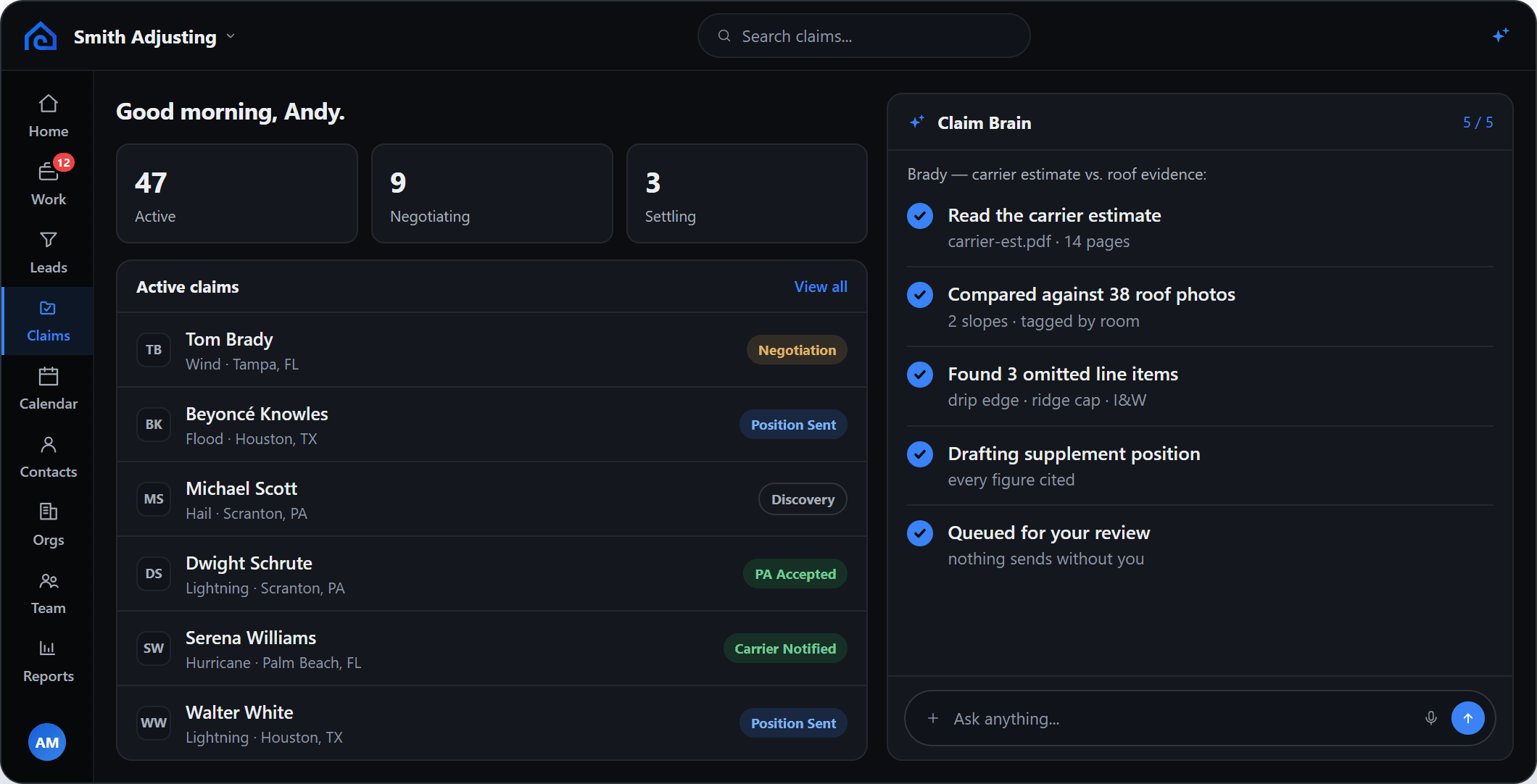
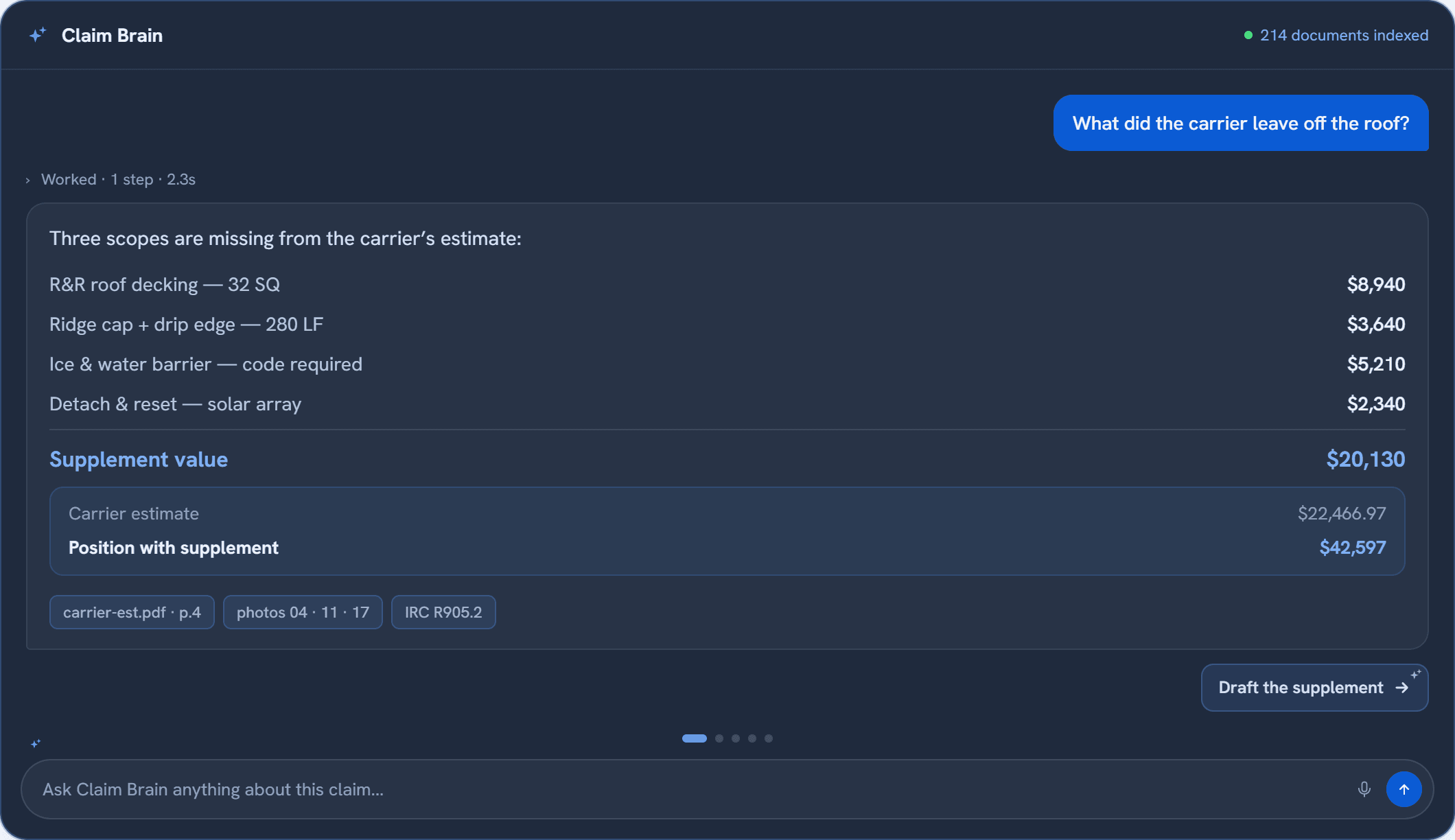
- The carrier's Xactimate export gets reconciled against your scope by hand, so the $0 rooms and omitted line items surface late, or never.
- Prompt-pay deadlines, proof of loss due dates, and limitations windows live in one person's head.
- Every handoff means the next adjuster rebuilds the story out of an email thread.
- Recoverable depreciation goes unchased because nothing is tracking the second check.
How claimOS runs the file
Sign the client, open the file
- Lead, inspection, and contract move through one pipeline. The signed contract opens the claim.
- Insured, carrier adjuster, and contractor stay attached to the claim instead of someone's phone.
- The letter of representation goes out from the file it belongs to.
Document the loss once
- Every photo is analyzed on upload: damage severity, tags, and a written description.
- Bulk uploads get read, sorted into folders, and flagged when something needs your eyes.
- The iOS app captures on-site and works offline: photos tagged as you shoot, voice notes transcribed.
Build and defend the position
- Estimate PDFs are read line by line, with RCV, ACV, depreciation, and O&P pulled automatically.
- Side-by-side comparison shows what the carrier paid, cut, and left out, with NOAA hail and wind data for the address.
- Letter Studio drafts the argument with citations; nothing sends until you approve it.
Track the clock and the money
- Statutory deadlines and limitations windows are tracked on the file and flagged before they close.
- Denials, acknowledgments, and payments log themselves to the timeline with the document attached.
- Collected, outstanding, overdue, and stale fees sit on one board every morning.
Five questions to ask any vendor
- Can it read a carrier estimate PDF, or does someone retype the line items?
- Does the storm data come with a report you can attach to a demand letter, or just a map on a screen?
- When a limitations window is thirty days out, does the system tell you, or does it wait to be asked?
- Can your client watch the file move, or do they call you for status?
- Is it one subscription and one login, or five tools and a reconciliation problem?
Questions buyers ask before rollout
What makes claimOS different from a generic CRM?
A CRM tracks the contact and the deal. It has no opinion about a proof of loss deadline, cannot read an Xactimate export, and does not know that recoverable depreciation is still outstanding. claimOS is built around the claim file itself (policy, evidence, estimate, letters, deadlines, and fee) with contact management as one part of it rather than the whole product.
Does claimOS replace Xactimate?
No. claimOS reads Xactimate, Symbility, and ESX output and compares it against your position. Estimating stays where it is. The reconciliation, the omissions, and the argument move here.
Is claimOS only for large firms?
No. Solo and small firms usually feel the problem first, because one person is carrying intake, documentation, estimating, negotiation, and billing at the same time. The tool sprawl costs the same either way. A small team just has nobody to absorb it.
Do we have to replace everything at once?
No. Most firms prove one workflow first, usually intake or documentation, and move the rest once the file already lives in claimOS.
Can the field team work without signal?
Yes. The iOS app is offline-first. Photos are tagged as you shoot them and voice notes are transcribed on device, then everything syncs when you are back in range.
How does the client stay informed?
Each claim has a client portal where the insured can watch the file move, which replaces most of the status calls a firm fields in a week.